

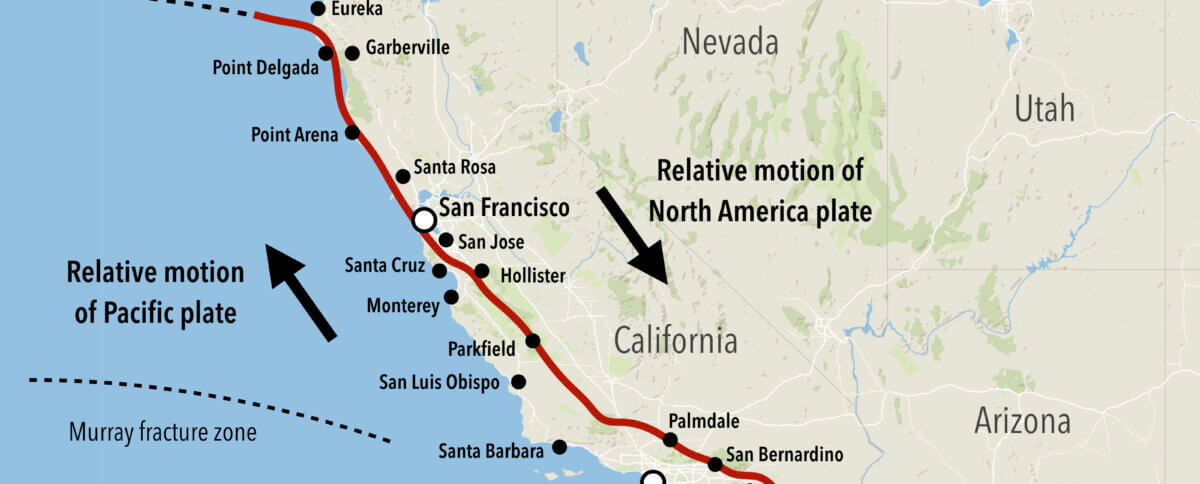
When you think about earthquake preparedness in the San Francisco Bay Area, your roof might not be the first thing that comes to mind. But here’s something most property owners don’t realize: those small tremors you barely notice can be quietly damaging your building over time. Every minor shake, every subtle vibration adds up, creating stress points that weaken traditional roofing systems year after year.
At Armstrong Foam Roofing, we’ve spent years helping Bay Area property owners understand how spray foam roofing technology can transform their buildings into more resilient structures that stand strong against seismic activity. Whether you own a home in Oakland, manage a commercial building in San Jose, or operate an industrial facility in Richmond, understanding how your roof responds to earthquakes could save you thousands in repairs and protect your most valuable investment.
Spray foam roofing is known for its durability, insulation, and waterproofing, but it also provides an unexpected benefit for buildings in earthquake-prone regions: added structural stability and seismic resilience.
Why Earthquake Resilience Matters for Bay Area Buildings
Living in Northern California means accepting that earthquakes are part of life. While major quakes grab headlines, it’s the constant low-level seismic activity that causes problems most people never see coming. The Bay Area experiences hundreds of minor earthquakes each year, most too small to feel, but large enough to gradually stress your building’s structure.
Traditional roofing materials like asphalt shingles, tiles, and metal panels respond poorly to this constant movement. They’re rigid systems that crack, separate, and fail when subjected to repeated stress. Imagine bending a paperclip back and forth, eventually, it snaps. That’s essentially what’s happening to conventional roofs in seismic zones, except the process takes years instead of seconds.
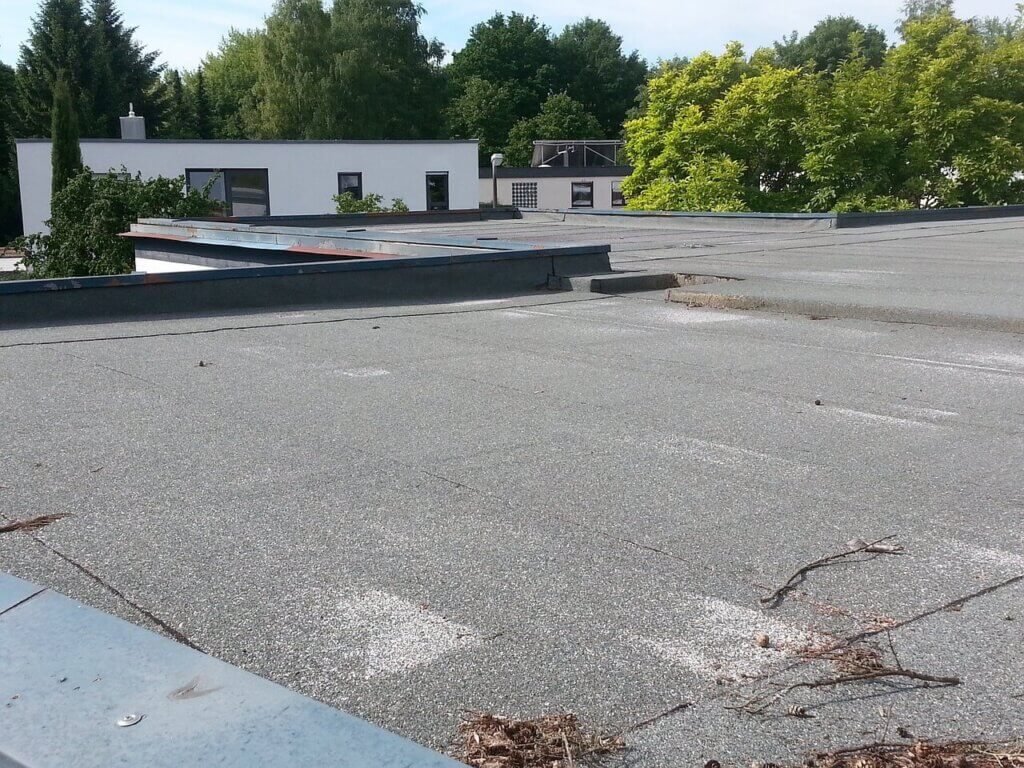
For residential homeowners, this means unexpected leaks, water damage, and costly repairs that seem to come out of nowhere. Commercial property owners face even higher stakes since roof failures can shut down operations, damage inventory, and create liability issues. Industrial facilities deal with additional concerns about hazardous material containment and regulatory compliance during seismic events.
Understanding Closed-Cell Spray Foam Technology
To understand why spray foam roofing performs so well in earthquake zones, you need to know what makes it different from traditional roofing materials. Closed-cell spray polyurethane foam isn’t just insulation that happens to go on your roof, it’s an engineered structural material with unique properties.
When our technicians apply closed-cell foam to your roof, we’re creating something remarkable. The material starts as two liquid chemicals that mix and react instantly, expanding into a dense foam that bonds directly to your roof deck. Within seconds, it hardens into a solid, rigid layer that becomes an integral part of your building’s structure.
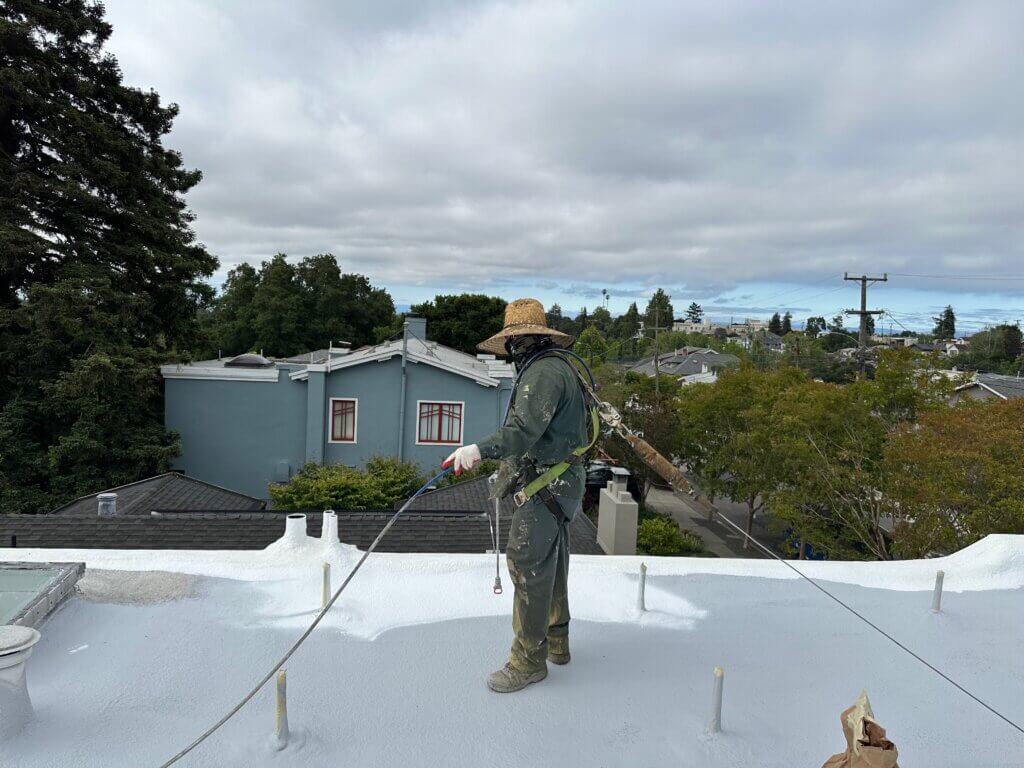
The “closed-cell” designation refers to the foam’s cellular structure. Picture a honeycomb where each individual cell is completely sealed off from its neighbors. This creates a material that’s incredibly strong for its weight, completely waterproof, and resistant to air infiltration. The typical density ranges from 2 to 3 pounds per cubic foot, which means it adds significant structural strength without putting excessive weight on your building.
What makes this technology special for earthquake zones is how the foam bonds with your existing roof deck. Unlike traditional roofing materials that sit on top of your structure with mechanical fasteners, spray foam creates a chemical bond with the substrate. It becomes part of the building itself, moving as one unit during seismic events.
How Spray Foam Adds Structural Strength During Earthquakes
The science behind spray foam’s seismic performance comes down to three key factors: monolithic construction, flexibility within rigidity, and structural reinforcement.

Monolithic Construction
First, let’s talk about monolithic construction. When we apply spray foam, we create a seamless, continuous layer across your entire roof surface. There are no seams, no joints, no fasteners penetrating the surface. This means there are no weak points where earthquake movement can exploit vulnerabilities. Your roof responds to seismic forces as a single, unified structure rather than as thousands of individual components trying to move independently.
Flexibility within Rigidity
Second, closed-cell foam has a unique characteristic that engineers call “elastic memory.” While the cured foam is rigid and strong, it retains a degree of flexibility that allows it to absorb and dissipate energy from seismic waves. Think of it like a shock absorber for your building. When an earthquake hits, the foam compresses slightly, absorbs the energy, and then returns to its original shape. This happens at a molecular level across the entire roof surface, distributing seismic forces evenly rather than concentrating them at weak points.
Structural Reinforcement
Third, spray foam actually reinforces your existing roof structure. When we apply it to your roof deck, it adds rigidity and strength to the entire assembly. The foam helps tie together roof deck panels, reduces racking (side-to-side movement), and provides additional resistance to uplift forces that can occur during earthquakes.
For property owners worried about the cumulative effects of frequent minor tremors, this reinforcement effect is particularly valuable. Each small earthquake that passes through your building is less likely to cause microscopic damage when your roof is reinforced with closed-cell foam.
Protection Against Cumulative Seismic Damage
Here’s what keeps most Bay Area property owners up at night: the damage you can’t see. While everyone prepares for “the big one,” your building is quietly suffering from hundreds of minor earthquakes that barely register on your consciousness.
Each tremor, no matter how small, causes minute movements in your building’s structure. Fasteners loosen incrementally. Sealants separate microscopically. Flashing pulls away fraction by fraction. Over years or decades, these tiny changes add up to significant problems. By the time you notice a leak or see visible damage, the underlying deterioration is usually extensive.
Built-Up Roofing (BUR) Systems
Traditional BUR roofing systems like tar & gravel are particularly vulnerable to this cumulative damage because they rely on mechanical connections and sealed joints. Every fastener that penetrates your roof is a potential failure point. Every seam where two materials meet can separate. Every flashing connection can work loose. It’s not a question of if these connections will fail in an active seismic zone – it’s a question of when.
Spray Foam Roofing
Spray foam roofing eliminates most of these vulnerable connection points. The seamless nature of the application means there are no joints to separate. The chemical bond to the substrate doesn’t loosen like mechanical fasteners. The waterproof nature of closed-cell foam means that even if microscopic cracks did develop, water intrusion is prevented at the cellular level.
For commercial and industrial property owners, this protection against cumulative damage translates directly to reduced maintenance costs and extended roof life. Instead of addressing repeated repairs every few years, you have a roofing system that maintains its integrity despite constant low-level seismic activity.
Benefits for Different Property Types in Seismic Zones
Not all buildings face the same earthquake challenges, and spray foam roofing delivers tailored advantages depending on whether you own a home, manage a commercial property, or operate an industrial facility. Let’s discuss how each property type benefits from enhanced seismic protection.
Residential Properties
Homeowners in the Bay Area face unique challenges when it comes to earthquake preparedness. Your home is probably your largest investment, and protecting it from seismic damage is essential for maintaining property value and ensuring family safety.
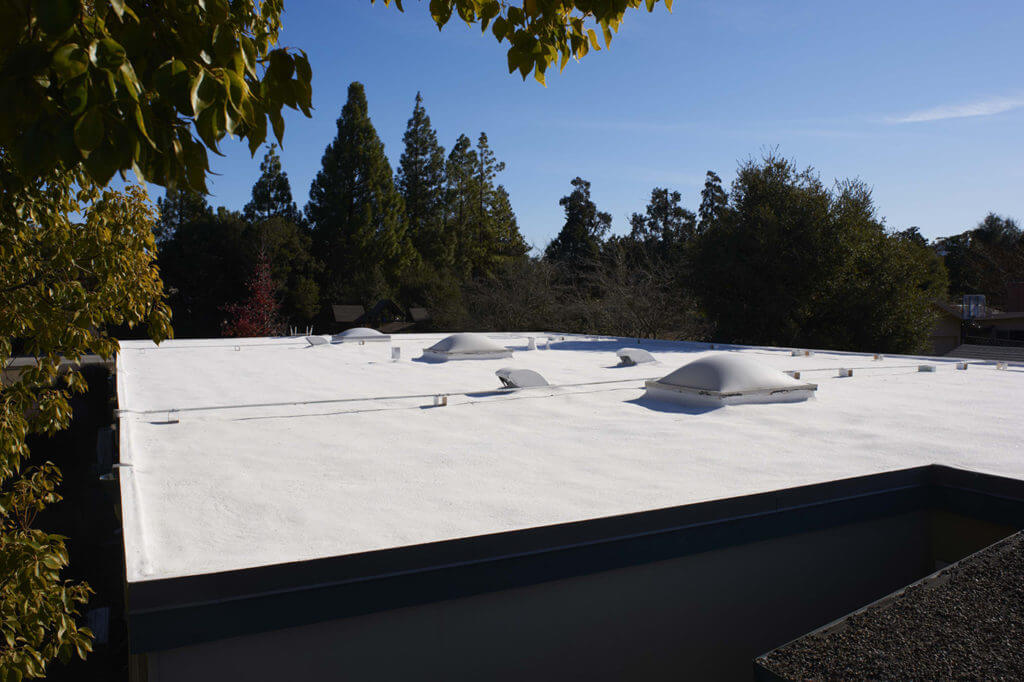
Spray foam roofing provides residential properties with multiple advantages. The improved structural integrity helps your entire home perform better during earthquakes. The seamless waterproofing prevents leaks that could damage your interior and possessions. The superior insulation properties reduce heating and cooling costs. And the long lifespan, properly maintained spray foam roofs can last 50 years or even a lifetime, means you’re making a one-time investment rather than facing repeated re-roofing projects.
For older Bay Area homes that may not have been built to modern seismic codes, spray foam roofing provides a practical way to improve earthquake resistance without the cost and disruption of a complete structural retrofit.
Commercial Buildings
If you manage or own commercial property in the Bay Area, roof failure isn’t just an inconvenience; it’s a business catastrophe. Water damage can destroy inventory, interrupt operations, and create liability issues with tenants or customers.
Commercial buildings benefit from spray foam’s proven performance in seismic zones. The rapid installation minimizes business disruption. The reflective coating applied over the foam reduces cooling costs, which is significant for large commercial spaces. The improved fire resistance of modern spray foam systems meets strict commercial building codes. And the ability to apply foam over most existing roof substrates means you can often avoid the expense and waste of a complete tear-off.
For commercial property owners concerned about long-term value, spray foam roofing is an investment that pays dividends through reduced maintenance, lower energy costs, and improved tenant satisfaction.
Industrial Facilities
Industrial properties face the most stringent requirements when it comes to seismic resilience. Regulatory compliance, hazardous material containment, and operational continuity all depend on maintaining roof integrity during and after seismic events.
Spray foam roofing excels in industrial applications because it addresses multiple concerns simultaneously. The chemical resistance of polyurethane foam makes it suitable for facilities with corrosive environments. The ability to create custom drainage solutions prevents water accumulation on large, flat industrial roofs. The compatibility with rooftop equipment means we can seal around penetrations without creating weak points. And the proven performance in seismic zones gives facility managers confidence that their buildings will maintain integrity when it matters most.
The Science of Seismic Wave Absorption
Understanding how spray foam interacts with seismic waves helps explain why this technology is so effective in earthquake zones. When an earthquake occurs, it generates several types of waves that travel through the ground and into buildings. These waves cause different types of movement: vertical compression, horizontal shearing, and complex rolling motions.
BUR roofing materials resist these movements, which sounds good but actually creates stress concentrations. The roof tries to stay stationary while the building beneath it moves, creating enormous forces at connection points. This is why you see roofing components flying off buildings during major earthquakes, and why fasteners and seams fail progressively during minor tremors.
Closed-cell spray foam takes a different approach. Its cellular structure allows it to compress and expand slightly in response to seismic forces while maintaining its waterproof and structural properties. This isn’t flexibility like rubber; it’s more like the controlled deformation that happens in modern earthquake-resistant building designs.
The foam distributes seismic energy across the entire roof surface rather than concentrating it at fasteners and seams. This distribution effect is similar to how modern earthquake engineering uses base isolators and dampers to protect buildings, except it’s happening at the roof level through the material properties of the foam itself.
For property owners, this means your roof isn’t just passively resisting earthquake forces. Your foam roofing system is actively helping to dissipate them, reducing stress on the entire building structure.
Sustainability and Environmental Impact
Beyond seismic resilience, spray foam roofing is one of the most sustainable roofing options available today. Its durability reduces the need for tear-offs and replacements, significantly cutting landfill waste.

Because it improves a building’s thermal performance, SPF roofing also helps reduce energy consumption and greenhouse gas emissions. When it’s time for maintenance, the roof can be recoated rather than replaced, saving materials and labor.
For eco-conscious Bay Area residents and businesses, this makes spray foam roofing a smart, long-term investment in both property resilience and environmental responsibility.
Installation Process and Building Code Compliance
Understanding how spray foam roofing is installed helps property owners appreciate why it performs so well in seismic zones. At Armstrong Foam Roofing, we follow a rigorous process that ensures optimal performance.
First, we thoroughly inspect and prepare your existing roof. We identify and repair any structural damage, ensure the substrate is clean and dry, and address any drainage issues. This preparation is crucial because spray foam bonds to whatever surface it’s applied to, so we need to start with a sound foundation.
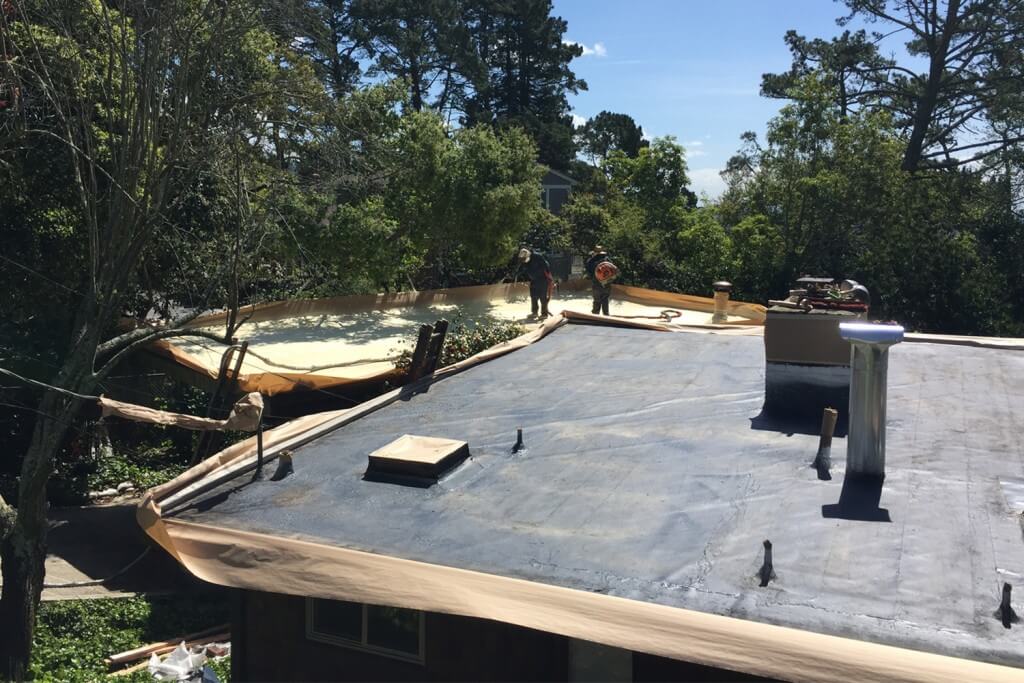
Next, our trained technicians apply the foam using specialized equipment that precisely mixes the two chemical components and sprays them onto your roof. We build up the foam in multiple passes, typically achieving a thickness of 1.5 to 3 inches, depending on your specific needs. Each pass bonds to the previous layer, creating that monolithic structure that performs so well during earthquakes.
After the foam cures, which happens quickly, we apply a protective coating. This coating provides UV protection (raw foam would degrade in sunlight), adds additional waterproofing, and creates the reflective surface that improves energy efficiency. We typically use silicone or acrylic coatings that are flexible, durable, and designed specifically for foam roofing systems.
Throughout the installation process, we ensure compliance with all local building codes and seismic requirements. California has some of the strictest building codes in the nation, specifically because of earthquake risks. Spray foam roofing systems meet or exceed these requirements when properly installed.
For property owners concerned about permits and inspections, we handle all of that. We’re familiar with local building departments throughout the Bay Area and know exactly what’s required to get your project approved.
Why Armstrong Foam Roofing for Your Bay Area Property
Choosing the right contractor for your spray foam roofing project is just as important as choosing the right roofing technology. At Armstrong Foam Roofing, we’ve built our reputation on delivering exceptional results for Bay Area property owners who demand the best roofing solutions.
We are a family-owned business that has been serving the San Francisco Bay Area since 1966, with over four decades of experience installing SPF systems. In fact, we have put more residential foam roofing systems on homes than any other company in America. Our commitment to quality workmanship, backed by some of the best and longest-lasting warranties in the industry (15 years on foam roofs), ensures you receive lasting protection for your property.
We understand local building codes, seismic challenges, and the unique climate conditions of Northern California. Every roof we install is designed to:
- Withstand thermal expansion and vibration from frequent micro-quakes
- Provide superior insulation and energy efficiency
- Deliver long-term waterproofing and protection
When you work with Armstrong, you’re partnering with a local expert dedicated to safety, performance, and customer satisfaction. We use only premium materials from leading manufacturers, and our technicians are trained and certified in the latest spray foam application techniques. We maintain strict quality control throughout every project, and we stand behind our work.
What also sets us apart is our commitment to educating property owners. We want you to understand exactly what you’re getting, how it will perform, and what to expect over the life of your roof. We provide detailed proposals, clear explanations, and transparent pricing with no hidden costs.
Protect Your Property from Seismic Damage Today
If you’re a Bay Area property owner concerned about earthquake damage, now is the time to act. Every minor tremor that passes through your building can potentially cause hidden damage to your traditional roofing system. The cumulative effects of seismic activity are real, and waiting for visible damage to appear means you’re already facing expensive repairs.
Spray foam roofing from Armstrong Foam Roofing provides protection against both major earthquakes and the gradual deterioration caused by constant low-level seismic activity. You’ll gain peace of mind knowing your roof is reinforcing your building’s structure, distributing seismic forces safely, and protecting your property for decades to come.
Don’t wait for the next earthquake to reveal weaknesses in your current roofing system. Contact Armstrong Foam Roofing today for a free roof inspection, consultation and quote. Our experienced team will assess your property, explain your options, and provide a detailed proposal showing exactly how spray foam roofing can improve your building’s earthquake resilience.
Frequently Asked Questions
Q1. How much does spray foam roofing cost compared to traditional roofing?
Spray foam roofing typically has a higher initial cost than conventional options like asphalt shingles or single-ply membranes. However, when you factor in the 50+ year lifespan, minimal maintenance requirements, energy savings, and superior earthquake resistance, the lifetime cost is often lower. In fact, since foam roofing is over 500% more efficient than conventional roofs, it can pay for its cost within 3 to 4 years.
Q2. Can spray foam be applied to my existing roof, or do I need a complete tear-off?
One of the advantages of spray foam is that it can usually be applied directly over most existing roof substrates, including metal, concrete, wood, and even some types of existing foam or single-ply membranes. This saves the cost and waste associated with tear-offs. However, the existing roof must be structurally sound. We’ll inspect your roof and let you know if any repairs or preparation work is needed before foam application.
Q3. How long does installation take, and will it disrupt my business or home?
Most residential installations take 1-3 days, depending on roof size and complexity. Commercial and industrial projects vary based on square footage but are typically completed faster than traditional re-roofing because there’s usually no tear-off required. The spray foam cures quickly so disruption is minimal. We work with property owners to schedule installation at convenient times to minimize any impact on operations.
Q4. What happens if the coating on top of the foam gets damaged?
The protective coating is durable, but if it does get damaged. For example, from someone walking on the roof with sharp objects or from falling tree branches but it can be easily repaired. Small areas can be touched up with additional coating. The underlying foam remains waterproof even if the coating is compromised, so you have time to address repairs without immediate risk of leaks. We recommend regular inspections to catch and repair any coating damage early. Most importantly, property owners need to recoat their roofs approximately every 20 years to ensure they keep performing like new.
Q5. Will spray foam roofing increase my property value?
Yes. A new spray foam roof is an attractive feature for potential buyers because of its long lifespan, energy efficiency, and superior performance. In earthquake-prone areas like the Bay Area, the seismic resilience adds even more value. Many appraisers recognize spray foam roofing as a premium feature that justifies higher property values. The energy efficiency can also improve your property’s environmental rating, which is increasingly important to buyers.