

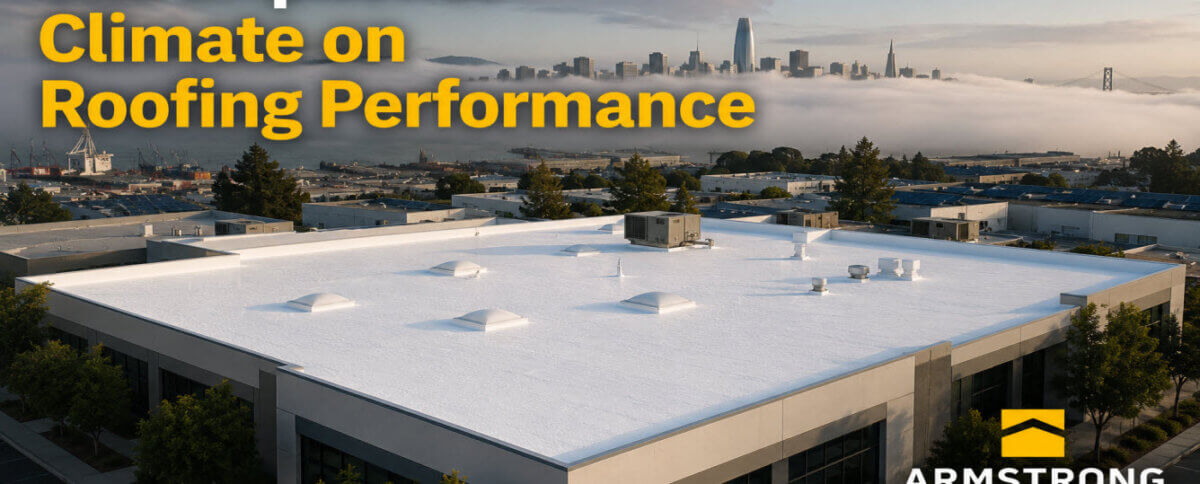
Every roof in the San Francisco Bay Area faces a relentless test. Saturating winter rains, salt-laden coastal fog, summer UV radiation, wildfire smoke, and dramatic temperature swings between neighborhoods are not theoretical risks. Unfortunately, these ongoing stressors quietly erode roofing materials year after year.
For flat and low-sloped roofs in particular, the stakes are even higher. Unlike steeply pitched roofs that shed water quickly by gravity, flat and low-sloped surfaces rely on careful drainage design and materials that can resist standing water, seam stress, and thermal movement. When those materials fall short, the consequences include interior water damage, mold growth, insulation failure, and expensive emergency repairs.
In this article, we explore the science of how Bay Area climate conditions specifically affect roofing performance, why flat and low-sloped roofs are especially vulnerable, and how spray polyurethane foam (SPF) roofing, including the systems installed by Armstrong Foam Roofing, offers a technically sound, locally proven solution.
“Understanding your regional climate is not optional for a roof that performs — it is the starting point for every good roofing decision.”
Bay Area Climate Overview
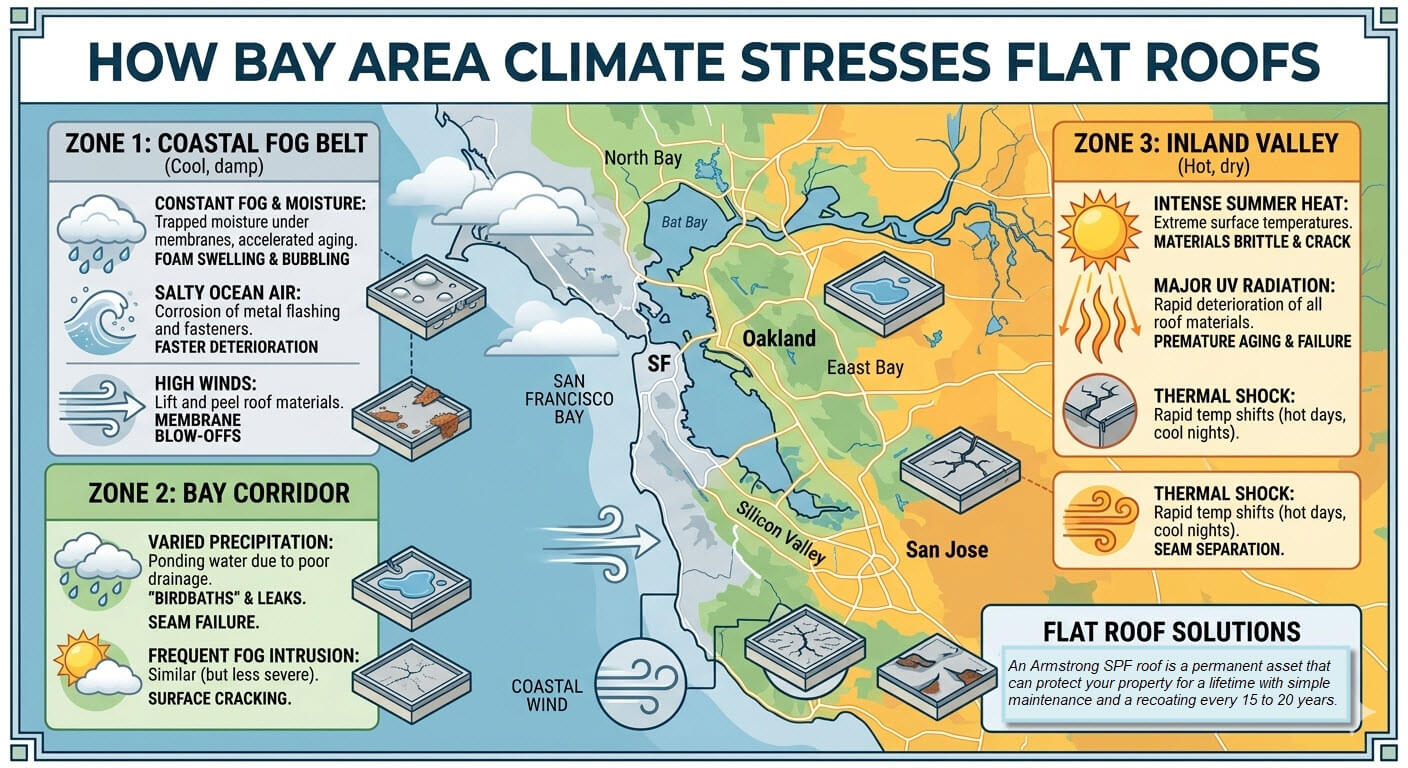
The San Francisco Bay Area sits within a Mediterranean climate zone, characterized by mild, wet winters and warm, dry summers. What makes the Bay Area unusual, even within California, is its pronounced microclimatic variation: temperatures, humidity, fog frequency, and wind patterns can differ dramatically from one neighborhood to the next, sometimes within just a few miles.
Key Climate Characteristics
- Annual rainfall in San Francisco averages approximately 21–23 inches (NOAA), with roughly 80% falling between November and March.
- Summers are predominantly dry, with May through September accounting for less than 5% of total annual precipitation.
- Dense marine layer fog is common in coastal and western neighborhoods, keeping surfaces damp and reducing UV exposure while elevating moisture exposure for months at a time.
- Inland areas, such as parts of the East Bay and South Bay, experience significantly higher summer temperatures, with inland valleys regularly reaching 90–100°F during heat events.
- Average daily temperatures in San Francisco are mild (lows in the mid-40s°F in winter, highs in the high-60s°F in summer), but temperature variation across the region is much wider.
- Wind: Prevailing westerly winds are common, particularly in summer afternoons, with gusts capable of lifting poorly secured roofing materials.
- Wildfire smoke from regional fires can deposit fine particulates and acidic compounds on roofing surfaces, contributing to material degradation.
Bay Area Climate Factors and Their Roofing Implications
| Climate Factor | Typical Conditions | Primary Roof Impact |
| Winter Rainfall | 21–23 in./year avg.; heavy storms Nov–Mar | Ponding water, seam leaks, substrate saturation |
| Marine Layer Fog | Frequent June–September (coastal zones) | Prolonged moisture exposure, surface dampness, mold risk |
| Summer UV Radiation | High June–September; coastal zones have UV despite cooler temps | Material oxidation, cracking, blistering, color fade |
| Temperature Swings | 40°F coastal to 100°F+ inland; day-night differential | Thermal expansion/contraction, seam fatigue, cracking |
| Wind | Avg. 10–15 mph; gusts higher near Bay/coast | Uplift risk, debris impact, membrane flapping stress |
| Wildfire Smoke & Ash | Regional smoke events increasingly common | Particulate buildup, potential acid deposits, clogged drains |
| Coastal Salt Air | Elevated chloride levels near shoreline | Accelerated corrosion of metal components, adhesive weakening |
How Bay Area Climate Damages Roofing Materials
Moisture Intrusion and Leaks
Water is the most destructive force acting on any flat or low-sloped roof. When seasonal rainfall is concentrated over four to five months, as it is in the Bay Area, drainage systems and roofing membranes face concentrated stress. Water that sits on a flat surface longer than 48 hours is typically classified as ‘ponding water,’ and it can penetrate through seams, fastener holes, and compromised membrane sections, leading to interior damage, insulation saturation, and structural decay.
Even outside the rainy season, marine layer fog deposits moisture on roofing surfaces over extended periods. In coastal neighborhoods, fog can keep roofs damp for weeks at a stretch, sustaining conditions that promote microbial growth and slow surface degradation.
UV and Heat Degradation
Despite San Francisco’s reputation for cool, foggy summers, UV radiation remains a significant roofing stressor throughout the Bay Area. Inland areas receive substantially more direct sun than the coast. Traditional roofing materials, especially dark-colored asphalt and modified bitumen, can absorb solar energy and reach surface temperatures well above ambient air temperature, accelerating thermal aging.
Research published through the Lawrence Berkeley National Laboratory indicates that cool roofing surfaces can run meaningfully cooler than standard dark surfaces under comparable conditions. This is a difference that translates directly to extended material lifespan and reduced cooling loads for conditioned buildings.
Thermal Expansion and Contraction
Flat roofing materials expand when heated and contract when cooled. In a region with significant day-to-night temperature variation, and even wider variation between inland and coastal locations, roofing membranes, seams, and flashings cycle through this expansion and contraction repeatedly. Over time, the cumulative fatigue at seams and joints creates micro-failures that serve as water entry points.
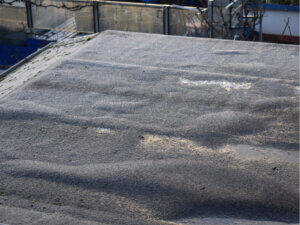
Traditional built-up roofing (BUR) and single-ply membranes manage thermal movement through laps and seams. Each of those seams is a potential vulnerability, particularly as adhesives age and sealants dry out under UV exposure.
Wind Uplift and Debris
Prevailing westerly winds across the Bay Area create ongoing uplift forces on flat roof membranes. Mechanically attached membranes can lift at edges and seams; unsecured ballast rock can become projectile debris in high winds. Prolonged wind cycles also create a ‘pumping’ effect at membrane edges, gradually working sealants and adhesives loose.
Wind also carries salt particles from the Bay and Pacific Ocean, depositing corrosive chloride compounds on roofing surfaces and metalwork. Over time, this accelerates the degradation of exposed fasteners, drip edges, and HVAC curb flashings.
Mold, Rot, and Insulation Loss
When moisture reaches the insulation layer beneath a roofing membrane, the consequences compound quickly. Saturated insulation loses much of its thermal resistance value, increasing heating and cooling costs even before visible interior damage appears. In organic materials, including certain insulation boards and wood decking, prolonged moisture exposure creates conditions for rot and mold. Mold remediation on a commercial building can run into tens of thousands of dollars, making prevention far more cost-effective than repair.
“A seam that fails in January can saturate roof insulation silently for months before the first water stain appears on an interior ceiling.”
Why Flat and Low-Sloped Roofs Need Special Protection
Flat and low-sloped roofs (typically defined as roofs with a pitch of 2:12 or less) represent the majority of commercial buildings, many mid-century modern homes, Eichler residences, apartment complexes, and industrial structures throughout the Bay Area. They offer architectural advantages, maximizing usable floor area, enabling rooftop mechanical systems, and supporting modern design aesthetics, but they demand a higher level of waterproofing engineering than steep-slope alternatives.
Why Flat Roofs Are More Vulnerable
- Gravity drainage is slower and less complete than on pitched roofs, making ponding water more likely.
- Larger membrane surface areas create more seams in traditional systems, each representing a potential failure point.
- Flashings at parapet walls, HVAC curbs, skylights, and penetrations are complex transition areas that require meticulous detail work.
- Flat roofs are more accessible, sometimes used for mechanical access or as outdoor spaces, increasing the risk of puncture damage.
- Thermal mass of flat roofing materials tends to heat up more during the day and cool more rapidly at night, amplifying expansion/contraction cycles.
Comparison of Common Flat Roofing Systems for Bay Area Conditions
|
Roofing System |
Seams / Joints | Waterproofing | Insulation R-Value | Cool Roof Potential | Maintenance Burden |
Est. Lifespan |
| Built-Up Roofing (BUR) | Multiple plies; seams present | Moderate; gravel surface erodes | Low (requires separate insulation) | Low unless coated | High (re-gravel, reseal) | 15–25 years |
| Modified Bitumen | Heat-welded or cold-adhesive seams | Moderate; seam vulnerability | Low (requires separate insulation) | Moderate with cap sheet | Moderate | 15–25 years |
| TPO Single-Ply Membrane | Heat-welded seams | Good at seams when new | Separate insulation required | High (white membranes) | Moderate (seam re-welding) | 15–30 years |
| EPDM (Rubber) Membrane | Adhesive or taped seams | Good when new; seams degrade | Separate insulation required | Low (black standard) | Moderate | 15–30 years |
| Spray Polyurethane Foam (SPF) | Seamless monolithic application | Excellent; no seams | ~6.5 per inch (built-in) | High with elastomeric coating | Low (inspect + recoat every 15–20 yrs) | 50+ years or even a lifetime (with minimal maintenance) |
Why Spray Polyurethane Foam (SPF) Roofing Performs So Well
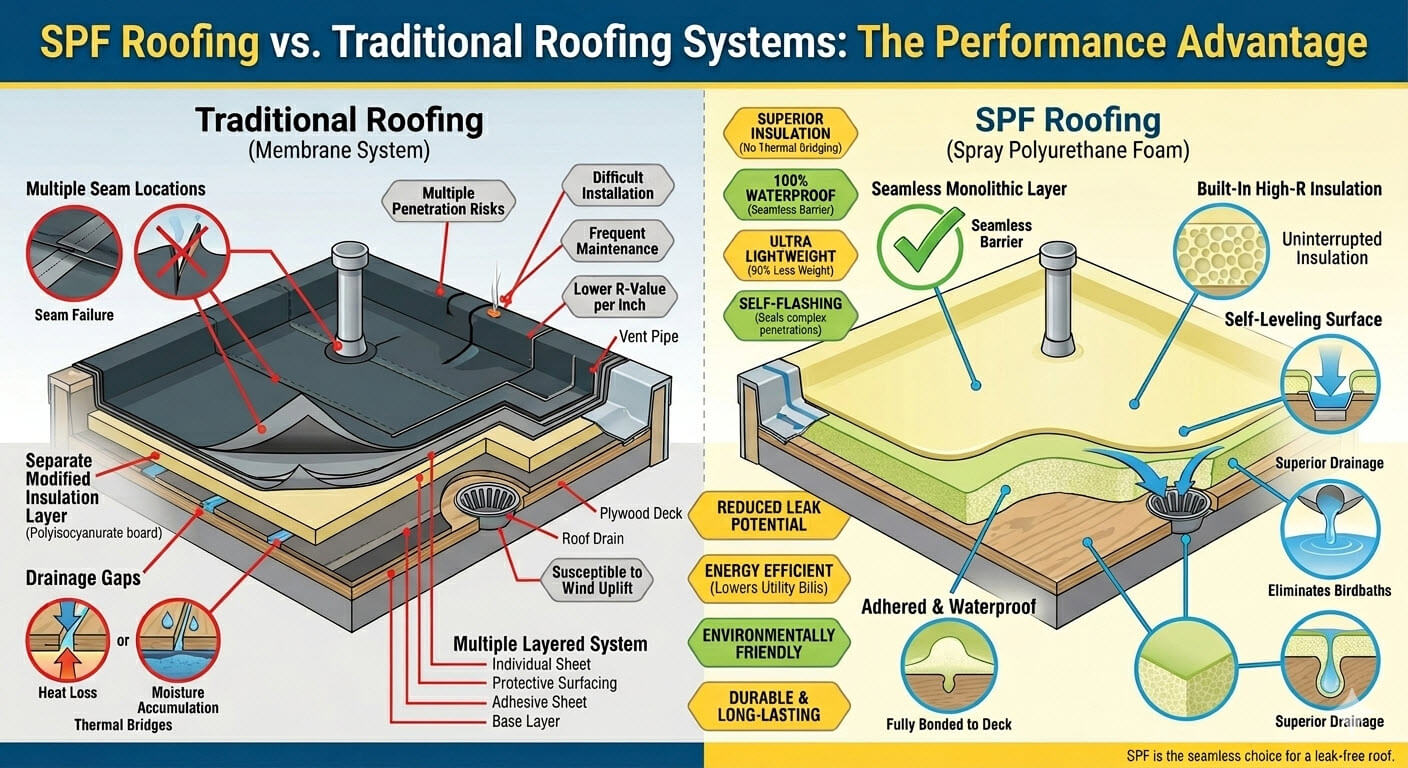
Spray polyurethane foam roofing is a fluid-applied system in which two liquid components, polyol resin and isocyanate, are mixed at a spray gun and applied directly to the roof surface. As the mixture cures, it expands into a lightweight, rigid closed-cell foam that adheres directly to the substrate and forms a continuous, monolithic layer across the entire roof.
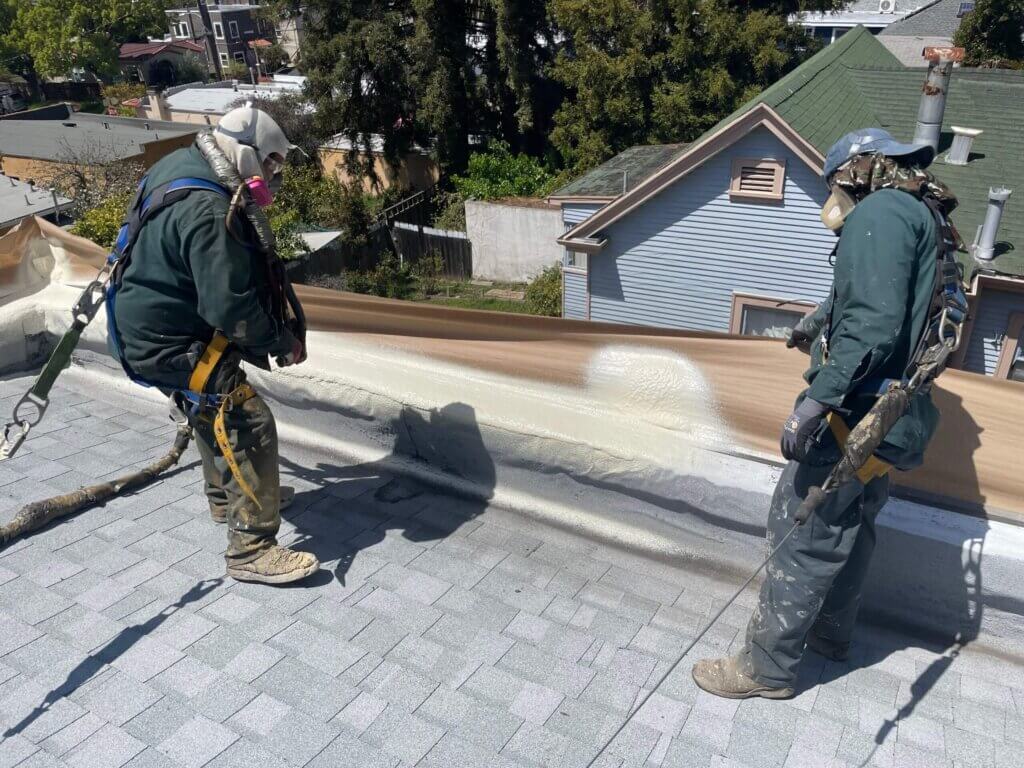
That seamless quality is SPF roofing’s most important technical differentiator in a wet climate like the Bay Area.
Seamless, Monolithic Waterproofing
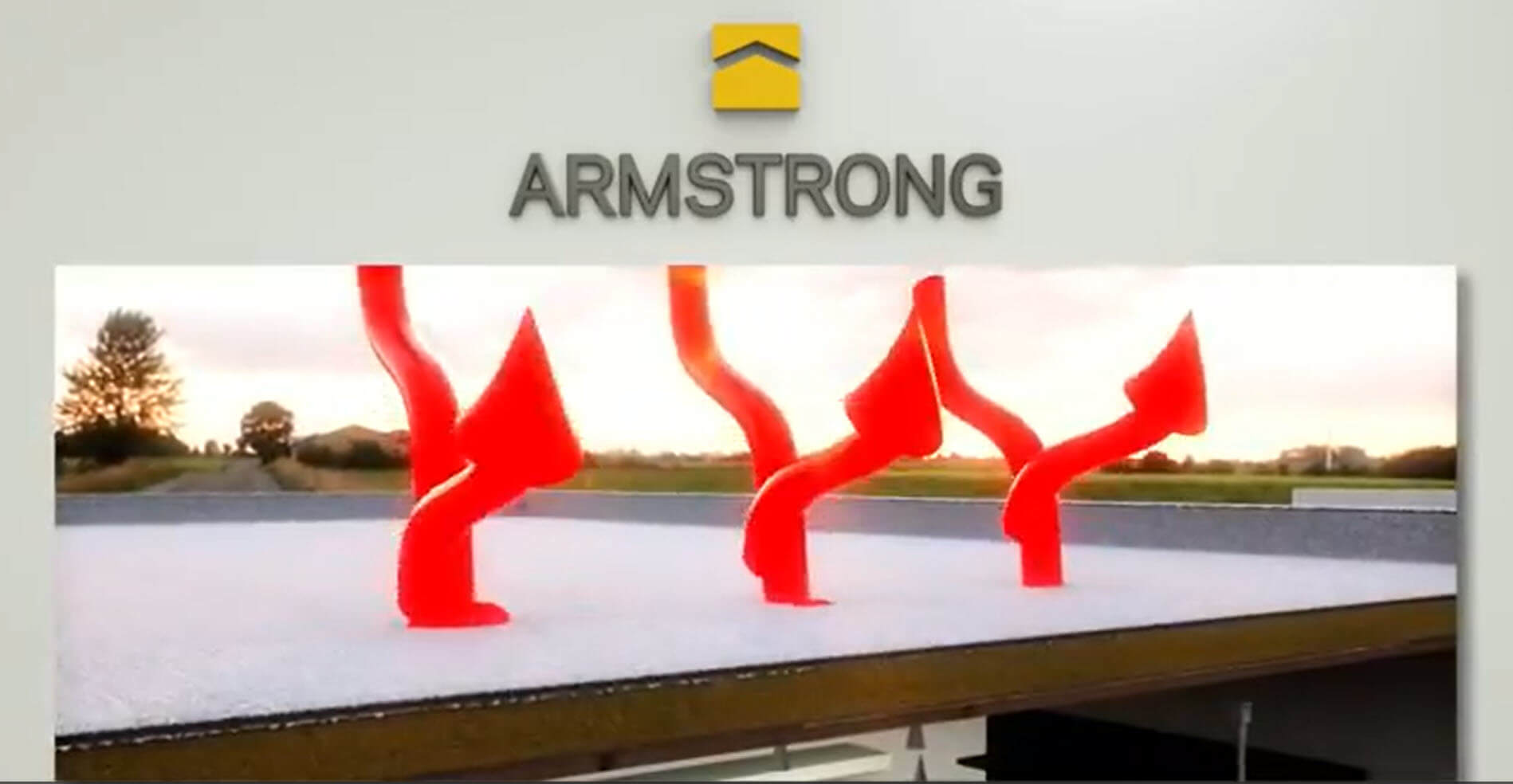
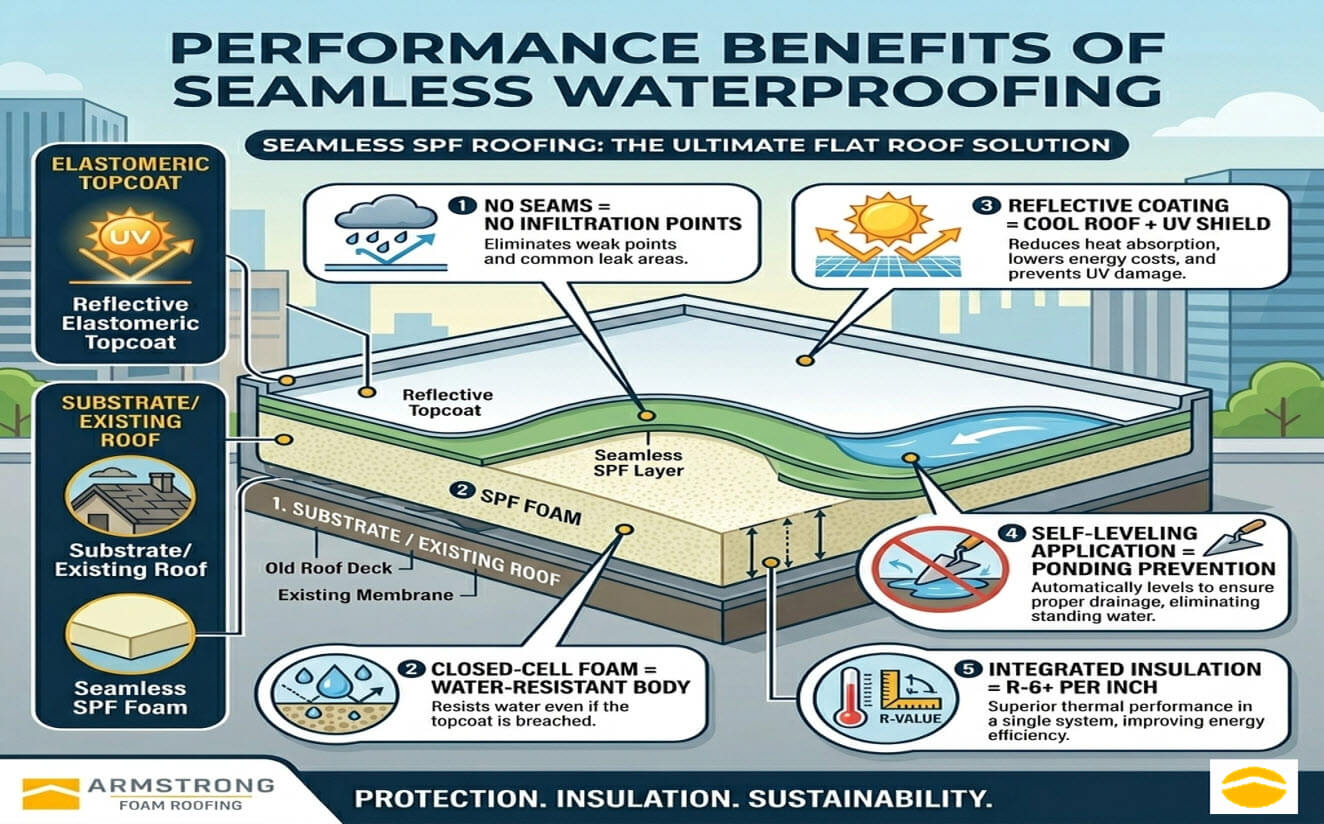
SPF starts as a liquid that expands 30 times its original volume in seconds, filling every crack and gap. Because SPF is fluid-applied, it flows into and bonds with every contour of the existing roof surface, including penetration details, HVAC curbs, parapet bases, and drain sumps, without the separate flashing components and seam sealants required by traditional systems. The result is a continuous, unbroken waterproofing layer with no seams, laps, or joints where water can infiltrate.
The closed-cell structure of cured SPF foam means individual cells are sealed against each other, providing inherent resistance to liquid water penetration through the foam body itself. When a UV-resistant elastomeric topcoat (typically silicone or acrylic) is applied over the foam, the system gains additional protection against UV degradation and surface weathering.
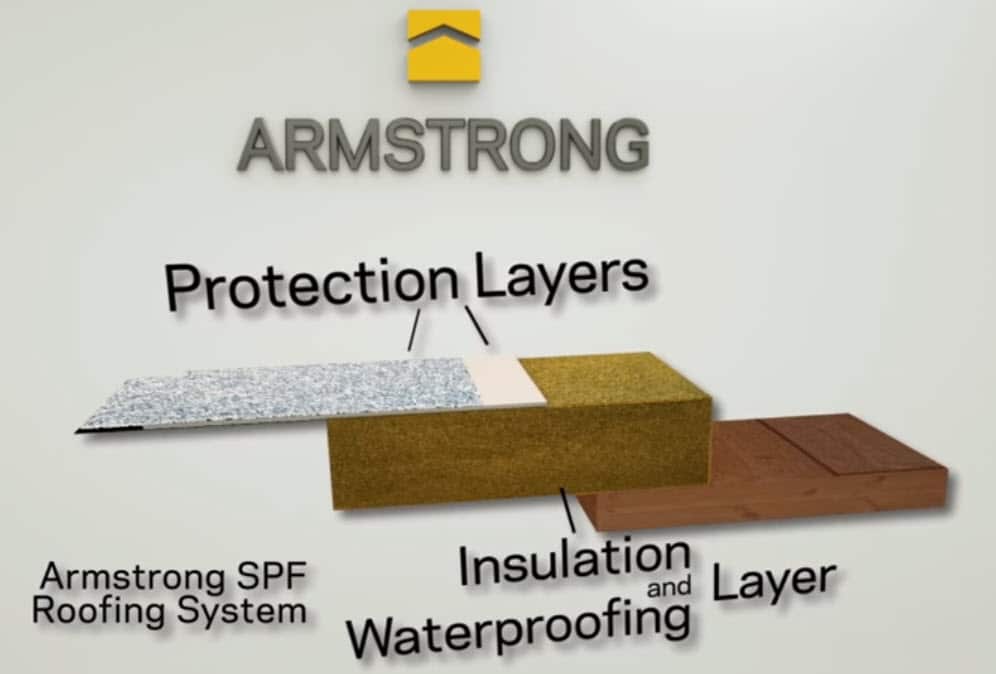
Built-In Insulation Performance
Research indicates that up to 40% of a building’s energy loss is due to air infiltration through tiny gaps. Spray polyurethane foam delivers one of the highest insulating values of any roofing material. Independent sources cite an R-value for closed-cell SPF of approximately 6 to 7 per inch of thickness, compared to approximately 3.7 to 4.0 per inch for rigid polyisocyanurate insulation boards commonly used under traditional membrane systems. Because SPF insulation is integral to the roofing membrane itself, there is no air gap between the insulation and the waterproofing layer, a gap that can allow thermal bypass and moisture accumulation in conventional assemblies.
This integrated insulation is particularly valuable for Bay Area buildings with interior mechanical systems (such as ductwork in attic or plenum spaces), where temperature differentials between conditioned and unconditioned areas create additional heat-flow demands.
Statistics for Bay Area Homeowners:
- 500%: How much more efficient SPF is than conventional roofing.
- 40%: The average reduction in heating and cooling costs after installation.
- 3 to 4 Years: The typical timeframe in which the roof pays for itself through energy savings.
Reflectivity and Cool-Roof Performance
When SPF is paired with a light-colored elastomeric coating, white or light gray silicone being common, the resulting system achieves solar reflectance and thermal emittance values that can qualify as a ‘cool roof’ under California’s building energy code.
California’s Title 24 Building Energy Efficiency Standards (Part 6) require that all new and replacement low-slope roofs meet minimum aged solar reflectance and thermal emittance thresholds. As of the 2025 Energy Code (effective January 1, 2026), these requirements apply statewide for all climate zones for nonresidential low-slope roofs. Coated SPF systems with qualifying elastomeric topcoats can meet or exceed these thresholds. Property owners considering a new or replacement SPF system should confirm that the specific coating selected carries Cool Roof Rating Council (CRRC) certification for the applicable Title 24 climate zone. Armstrong’s team can help verify compliance for specific projects.
“A reflective SPF roof surface can stay measurably cooler than a dark conventional roof under the same sun, reducing heat transfer into the building and cutting cooling energy demand.”
Self-Leveling for Drainage Improvement
One of the practical advantages of a fluid-applied system is the ability to feather the foam application to improve drainage slopes. A skilled applicator can build up SPF thickness in areas where the existing roof has low spots or inadequate slope toward drains, effectively eliminating ponding water zones without the structural intervention required by other systems. This is a significant benefit for aging Bay Area flat roofs where original drainage geometry has degraded.

Lightweight and Retrofit-Friendly
Cured SPF foam is lightweight, typically adding only a fraction of a pound per square foot, meaning it can often be applied over existing roofing without triggering structural re-evaluation or the tear-off costs associated with replacement. This makes SPF an especially practical option for existing Bay Area commercial and residential buildings, where full roof replacement would involve both higher costs and potential business disruption.
Why Armstrong SPF Systems Are a Strong Choice for Bay Area Properties
Armstrong Roofing has been a Bay Area institution since 1966, six decades of installing and maintaining roofing systems on flat and low-sloped properties throughout San Francisco, the East Bay, South Bay, Marin County, and beyond. That level of local experience matters because Bay Area roofing conditions, the fog, the salt air, and the microclimatic variation, are not identical to conditions in Phoenix or Dallas, and roofing systems need to be selected and installed with regional realities in mind.
Local Knowledge and Community Roots
As a multi-generational family business, Armstrong has accumulated decades of firsthand knowledge about how Bay Area weather cycles affect foam roofing performance. That institutional knowledge, built project by project across more than 30,000 satisfied customers, per the company’s own records, informs material selection, coating choices, and installation practices specific to this region. For more information on recent local projects, please visit our case studies page.
Armstrong is also an active member of the Spray Polyurethane Foam Alliance (SPFA) and holds a GAF Master Elite contractor credential, reflecting a commitment to industry training and adherence to standards that matter when assessing long-term installation quality.
The Armstrong Weather-Guard System (AWS)
Armstrong’s proprietary approach to exterior improvements, the Armstrong Weather-Guard System, is designed to deliver professionally installed materials optimized for both price and long-term life-cycle performance. For foam roofing specifically, this means careful surface preparation, appropriate foam formulation for Bay Area conditions, a compatible topcoat selected for the building’s climate zone and use requirements, and workmanship-backed warranty coverage.
Extreme Weather and Durability
Warranty Support
Armstrong offers foam roofing warranties backed by their decades of Bay Area installation experience. Because SPF roofing’s lifespan and warranty coverage are directly tied to installation quality, working with a contractor who has a deep local track record reduces the risk of premature system failure. Prospective customers are encouraged to ask specifically about warranty terms, recoating requirements, and the conditions under which warranty coverage applies.
Maintenance, Recoating, and Long-Term Ownership Cost
One of the most common misconceptions about SPF roofing is that it is maintenance-free. It is not, but its maintenance requirements are straightforward, predictable, and less labor-intensive than many alternatives.
Routine Inspection
Industry practitioners generally recommend that SPF roofs be inspected at least twice yearly, once in the fall before the Bay Area rainy season begins, and once in the spring after winter storms have passed. Inspections should check for mechanical damage (foot traffic punctures, HVAC maintenance damage), coating erosion, and the condition of flashings and drain areas.
Recoating
The protective elastomeric topcoat applied over SPF foam will eventually thin under UV exposure and weathering. Most professional guidance suggests recoating every 15 to 20 years, depending on coating type, application thickness and whether it was applied according to the guidelines of the manufacturer. Recoating restores UV protection, extends the waterproofing life of the underlying foam, and, importantly, refreshes the solar reflectance values required for California cool-roof compliance.
Because recoating does not require tear-off or substrate replacement (absent underlying damage), it is considerably less expensive and disruptive than full system replacement. A properly maintained SPF roof can, in principle, continue performing through multiple recoat cycles, approaching or exceeding 50 years of total service life or even a lifetime.
Frequently Asked Questions
The following questions and answers are designed to help Bay Area homeowners, building managers, and commercial property owners quickly find relevant, accurate information about SPF roofing and Bay Area climate conditions.
Is spray foam roofing a good choice for flat roofs in the San Francisco Bay Area?
Yes, spray polyurethane foam (SPF) roofing is well suited to the flat and low-sloped roofs common throughout the Bay Area. Its seamless, fluid-applied construction eliminates the seam vulnerabilities that traditional membrane systems are susceptible to, which is a critical advantage given the region’s concentrated winter rainy season. SPF also provides built-in insulation and, when paired with a qualifying elastomeric topcoat, can meet California’s cool roof requirements under Title 24.
Performance depends on proper installation by an experienced contractor, the selection of an appropriate coating system for the local climate zone, adequate drainage, and adherence to a regular inspection and recoating schedule.
How does Bay Area weather affect flat and low-sloped roofs?
Bay Area weather creates multiple overlapping stress cycles for flat roofs. Wet winters (averaging 21–23 inches of rain annually in San Francisco) create ponding water risk and pressure-test all seams, joints, and flashings. Coastal fog keeps surfaces damp for extended periods, even in summer. UV radiation and heat, stronger in inland areas, degrade traditional materials and accelerate seam aging. Day-to-night temperature swings drive repeated expansion and contraction cycles that fatigue roofing membranes and sealants over time.
Wind from the Bay and ocean also deposits salt particles on roofing surfaces, accelerating corrosion of exposed metal components. For flat roofs specifically, which drain more slowly than pitched roofs, each of these stressors tends to be more consequential than on steep-slope alternatives.
What makes SPF roofing better than traditional roofing systems?
The primary advantage of SPF over traditional systems such as built-up roofing (BUR), modified bitumen, TPO, or EPDM is its seamless construction. All seam-based systems have joint lines that, over time, are vulnerable to adhesive failure, membrane separation, and water infiltration. SPF eliminates those joints by forming a single continuous layer from one side of the roof to the other.
Additional advantages include built-in insulation (no separate insulation layer required), the ability to improve drainage slopes through targeted foam application, compatibility with cool-roof coatings, and a potential service life that, with proper maintenance, can exceed that of most conventional alternatives.
Does spray foam roofing help with energy efficiency and cooling costs?
Yes. Closed-cell SPF has one of the highest insulating values per inch of any commercial roofing material, approximately 6 to 7 per inch of R-value. Because the insulation is integral to the roofing assembly, it eliminates the thermal bypass that can occur with separate insulation boards and membrane systems. This translates to reduced heat transfer through the roof in both summer (reducing cooling loads) and winter (reducing heating loads).
When paired with a reflective elastomeric topcoat, the system also reduces the amount of solar energy absorbed by the roof surface, directly cutting cooling energy demand in buildings with conditioned space below. The U.S. Department of Energy has published research confirming that cool roofing on California nonresidential buildings can produce measurable annual cooling energy savings (see osti.gov, LBNL-50451 for reference figures).
Is Armstrong SPF roofing compliant with California cool roof requirements?
Armstrong installs SPF systems with elastomeric topcoats that, when properly selected and applied, can meet California’s Title 24 Building Energy Efficiency Standards for cool roofs on low-slope buildings. The 2025 Energy Code (effective January 1, 2026) requires qualifying solar reflectance and thermal emittance values for all new and replacement low-slope nonresidential roofs statewide. Eligible coatings should carry Cool Roof Rating Council (CRRC) certification.
Property owners should work with Armstrong’s team to confirm that the specific coating system selected for their project meets the minimum aged solar reflectance and thermal emittance thresholds applicable to their climate zone and building type. Requirements can vary for residential versus nonresidential applications and by project scope. Visit coolroofs.org for the CRRC’s rated product directory.
How long does SPF roofing last in Bay Area conditions?
When properly installed and maintained, an SPF roofing system can remain functional for 50 years or more, and even a lifetime. The foam substrate itself is durable and relatively inert; the primary maintenance variable is the condition of the UV-protective elastomeric topcoat, which gradually thins under solar exposure and weathering and typically requires renewal every 15 to 20 years.
In the Bay Area, the coastal marine layer and salt air can affect coating durability near the shoreline. Inland installations with higher UV exposure may require more frequent attention to coating condition. Annual or semi-annual inspections are the most reliable way to track coating condition and address minor repairs before they become larger problems.
Does spray foam roofing help stop leaks and ponding water?
Yes, addressing both leaks and ponding water is one of SPF roofing’s most practical advantages for Bay Area flat roofs. The seamless monolithic application eliminates the seam and joint vulnerabilities that are the most common source of leaks in traditional flat roof systems. The closed-cell foam structure itself is highly resistant to water penetration through the foam body.
For ponding water, a skilled SPF installer can vary foam application thickness across the roof surface to build positive drainage slopes toward drains and scuppers, effectively correcting drainage deficiencies in the existing roof geometry without structural modification. This self-leveling capability is particularly valuable for older Bay Area buildings where original drainage design has degraded or was inadequate from the outset.
How often does an SPF roof need maintenance or recoating?
General industry guidance calls for SPF roofs to be inspected at least twice per year, before and after the Bay Area rainy season, and for the protective topcoat to be reapplied every 15 to 20 years, depending on coating type, original application thickness, UV exposure, and roof traffic. Recoating is a straightforward process that does not require tear-off of the underlying foam and is considerably less expensive than full roof replacement.
Minor repairs, addressing small punctures, abrasions, or flashing details, should be addressed promptly to prevent moisture from reaching the foam substrate. A foam roof that receives consistent inspection and timely minor repairs will dramatically outlast one that is neglected.
Can SPF roofing be installed over an existing roof?
In many cases, yes. Because SPF is lightweight and bonds directly to the existing substrate, it can often be applied over an existing roof without requiring complete tear-off, reducing both cost and landfill waste. However, the existing roof must be free of saturated insulation, delaminated sections, or structural damage that would compromise foam adhesion. A professional assessment of the existing roof’s condition is an essential prerequisite.
Armstrong offers roof evaluations to assess whether an over-installation approach is appropriate for a given property, or whether targeted repairs or partial tear-off is needed before SPF application. This assessment is an important step in ensuring long-term system performance.
Why choose Armstrong Foam Roofing for a Bay Area flat roof project?
Armstrong has been installing and maintaining foam roofing systems in the San Francisco Bay Area since 1966, giving them direct, multigenerational experience with the specific climate conditions, building types, and regional code requirements that affect Bay Area roofing projects. With over 30,000 satisfied customers, membership in the Spray Polyurethane Foam Alliance (SPFA), and a GAF Master Elite contractor credential, Armstrong brings both local knowledge and industry-standard professional credentials to every project.
For property owners evaluating SPF roofing, the quality of installation is arguably as important as the quality of materials, a point the SPFA and roofing industry broadly acknowledge. Choosing a contractor with a verifiable long-term track record in the specific region and climate is one of the most effective risk-reduction steps available. Armstrong offers free consultations and estimates for Bay Area property owners interested in exploring SPF roofing.
Your Roof and the Bay Area Climate
The San Francisco Bay Area’s distinctive climate (wet winters, coastal fog, UV stress, thermal cycling, wind, and salt air) creates a challenging operating environment for any roofing system. For flat and low-sloped roofs in particular, where drainage is slower and seam vulnerability is higher, the combination of moisture and thermal stress makes material selection and installation quality decisive factors in long-term performance.
Spray polyurethane foam roofing addresses each of these challenges through its core technical properties: seamless waterproofing, built-in insulation, self-leveling drainage capability, and compatibility with reflective coatings that meet California’s cool-roof and energy code standards. It is not a perfect system because installation quality matters enormously, maintenance cannot be neglected, and not every roof is a good candidate. However, for well-evaluated projects handled by experienced installers, like Armstrong Foam Rooging, SPF offers a durable, energy-efficient, and cost-effective solution for Bay Area flat and low-sloped roofs.
Armstrong Foam Roofing brings over five decades of Bay Area-specific experience to that evaluation. Whether your property is a single-family Eichler home in the East Bay, a commercial office building in San Jose, or a multi-unit residential complex in Marin County, understanding the relationship between your roof and your local climate is the first step toward making a sound investment.
READY TO PROTECT YOUR ROOF FROM BAY AREA WEATHER?
Request a free roof evaluation from Armstrong Foam Roofing. Our team will assess your property, explain your options, and provide a clear, no-obligation estimate. We serve residential and commercial property owners throughout the San Francisco Bay Area, and we have been doing so since 1966.
Get Your Free Estimate at armstrong1234.com | Call (844) 796-1234
Armstrong Foam Roofing, Painting & Windows | 4575 San Pablo Avenue, Emeryville, CA 94608 | License #245291