

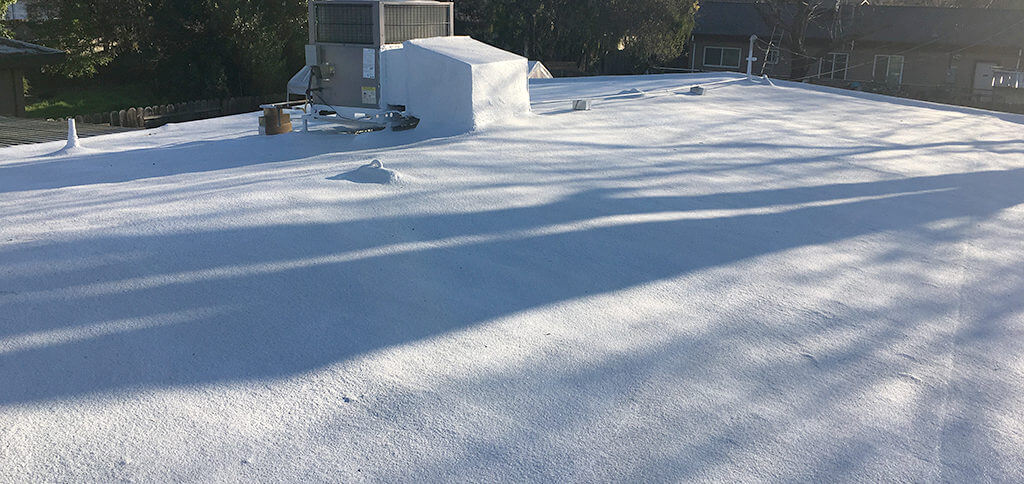
If you own a home or commercial building in the San Francisco Bay Area with a flat or low-sloped roof, chances are you’ve heard about or already have spray polyurethane foam (SPF) roofing, often called foam roofing. It’s known for being super durable and boosting energy efficiency, and making indoor spaces more comfortable. Moreover, we believe no other roofing material can match its longevity and performance.
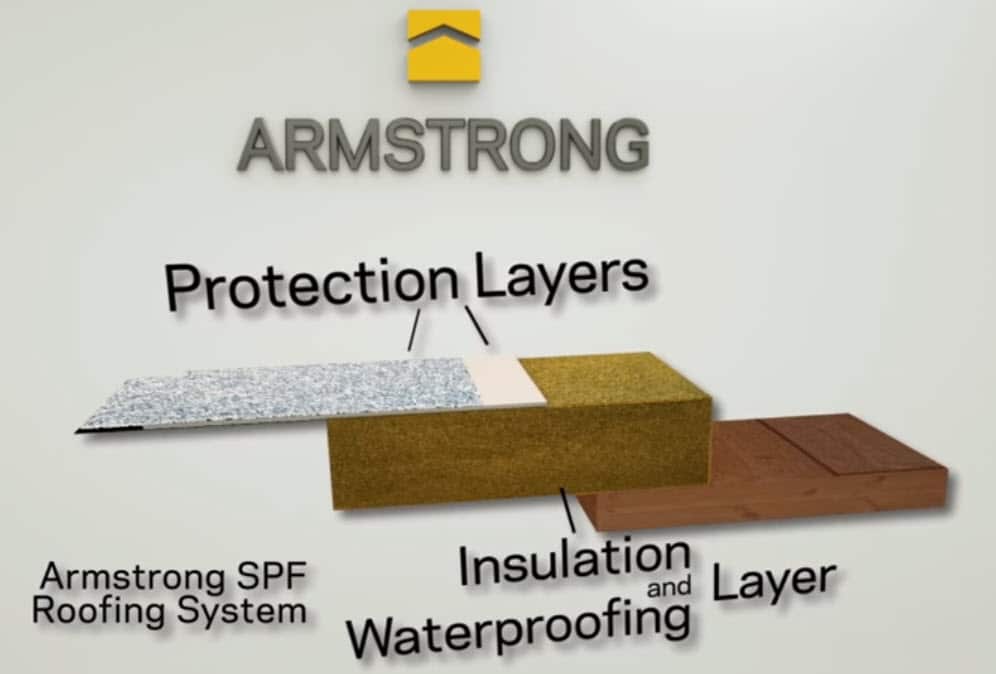
SPF roofing works by spraying a layer of polyurethane foam, usually about 1 ½” plus or minus ¼” thick, directly onto your roof. This creates a seamless barrier that’s both waterproof and insulating. While foam roofing is considered low-maintenance, just like anything else, it needs minimal maintenance to keep it in optimal shape to protect your investment for the long haul. We will guide you through the key things you need to know about foam roof maintenance to keep your Bay Area foam roof performing its best.
Understanding Foam Roofing Systems in the Bay Area Climate
Foam roofing systems have become increasingly popular throughout the San Francisco Bay Area, and for good reason. These SPF roofs provide excellent insulation, seamless waterproofing, and can withstand the unique climate challenges we face in Northern California. From the foggy mornings in San Francisco to the scorching summer heat in the East Bay, a well-maintained foam roof can protect your home or commercial building for decades.
Bay Area Microclimates: Unique Challenges for Foam Roofing Durability
The Bay Area’s microclimate variations create specific challenges for foam roofs. Coastal areas experience salt air and persistent moisture, while inland regions face extreme temperature fluctuations. These environmental factors can accelerate wear on your roof’s protective coating and potentially compromise its integrity if not properly maintained.
Harnessing Energy Savings: Why Foam Roofing Excels in the Bay Area
Many property owners choose foam roofing for its energy efficiency benefits, which are particularly valuable given California’s focus on sustainable building practices and rising energy costs. The continuous insulation provided by foam roofing can significantly reduce heating and cooling expenses, especially during those summer heat waves or chilly winter months.
Maintaining Peak Performance: The Essential Role of Protective Coatings
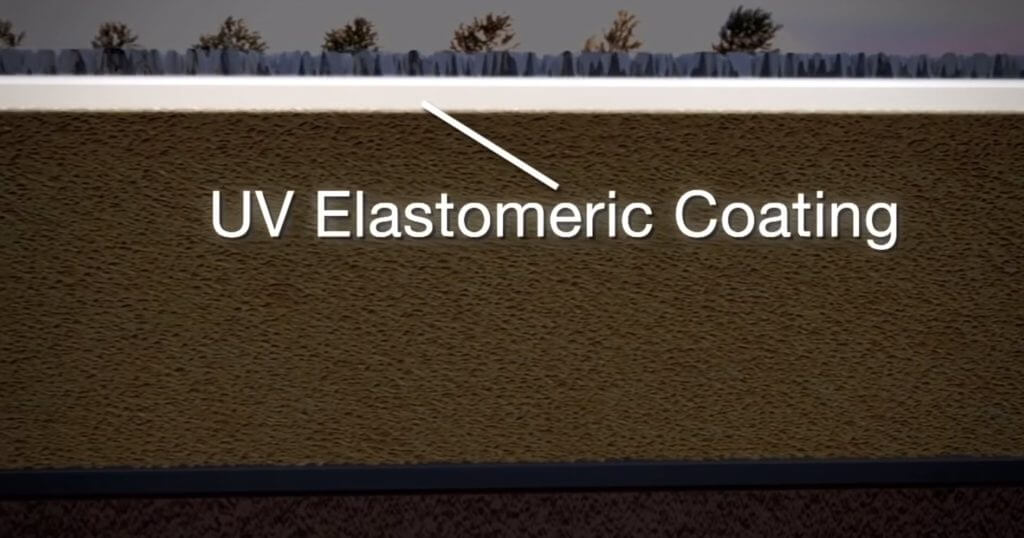
However, even the most durable foam roof requires some maintenance to perform at its best. The protective elastomeric coating that shields the foam from UV rays and moisture needs periodic inspection and reapplication. Without this maintenance, your roof could develop problems that compromise its waterproofing capabilities and energy efficiency benefits.
Strategic Maintenance: Tailoring Your Foam Roof Care for Bay Area Conditions
Understanding your foam roof’s specific needs based on its age, location, and exposure conditions is the first step in developing an effective maintenance plan. Whether your building is near the salty air of the Embarcadero or dealing with the oak pollen in the South Bay, tailoring your maintenance approach to your specific situation will extend your roof’s lifespan and maximize your investment.
Why Your “Low-Maintenance” Foam Roof Still Needs Attention
Spray foam roofing is low-maintenance, but that doesn’t mean you can just forget about it. While it’s much easier to care for than conventional roofing systems like tar and gravel, ignoring it can lead to problems. The key to a foam roof’s performance and longevity is its protective coating. Over time, the sun’s UV rays and the weather start to break down this layer of elastomeric coating.
If this protective coating isn’t maintained, especially by recoating when needed, the underlying polyurethane foam can start to degrade. The sources mention that unprotected foam can degrade at a rate of about 1/16” per year. While a foam roof is typically 1” to 3” thick and complete failure takes many years of neglect, minor issues can pop up if you’re not paying attention. Proper maintenance, even though minimal, helps ensure the roof continues to provide excellent waterproofing and insulation, ultimately helping you avoid costly repairs down the line and extending its lifespan for decades, maybe even a lifetime.
Schedule Regular Seasonal Check-ups
Think of your roof inspections like getting your car’s oil changed – it’s a simple routine that prevents big headaches later. We recommend checking your spray foam roof a minimum of twice a year, ideally in the spring and fall. This is your chance to catch small issues before they become major problems.
During these inspections, you’ll want to look for a few key things. First, check for any debris buildup or areas where water might be standing. We’ll talk more about water next, but removing debris helps prevent it from blocking drains or damaging the coating. Second, inspect the protective coating for any cracks, holes, or other damage. Keep an eye out for potential damage caused by things like fallen tree branches, especially after storms. Pay special attention to areas that might see foot traffic, like around HVAC units, or vulnerable spots like skylights, as these can sometimes be entry points for water if not properly sealed or damaged. Identifying these issues early is crucial for prompt repair.
Common Foam Roof Damage
Surface deterioration is often the first sign of trouble on a foam roof. The protective elastomeric coating naturally weathers over time, especially in areas with direct sunlight exposure. Look for chalking (a powdery residue when you run your hand over the surface), cracking, or areas where the coating has worn thin, exposing the darker foam underneath. These signs indicate that your roof’s UV protection is compromised, and recoating should be scheduled soon.
Ponding Water Challenges
Ponding water is particularly problematic for foam roofs. If you notice areas where water remains standing for more than 48 hours after rainfall, this indicates a low spot has developed in the foam. This commonly occurs near drains or in high-traffic areas where the foam has been compressed. Ponding accelerates coating deterioration and can eventually lead to water infiltration. Address these areas promptly by building up the foam or improving drainage.
Protecting Your Foam Roof from Physical Harm
Physical damage from foot traffic, dropped tools, or fallen branches is another common issue. Foam roofs are relatively soft compared to other roofing materials, making them vulnerable to punctures and compression. Even small punctures can allow moisture to penetrate the foam, potentially causing widespread damage if not repaired quickly. Establish walkways for maintenance personnel and restrict roof access to necessary activities only.
Birds & Pests: Unexpected Foam Roof Threats
Bird and animal damage may seem minor, but can create significant problems. Birds sometimes peck at foam roofs, particularly in areas where the coating has already deteriorated. Small animals may attempt to nest in or chew foam edges, especially around roof perimeters. Regular inspections should include checking for this type of damage, particularly in buildings near parks or wooded areas like those in Marin County or the Oakland hills.
Termination Points: Critical Areas for Foam Roof Care
Separation at termination points and flashings requires immediate attention. Examine the areas where your foam roof meets walls, parapets, skylights, and other penetrations. The sealant in these areas can crack or separate due to building movement and thermal expansion. These gaps provide direct entry points for water and should be resealed promptly.
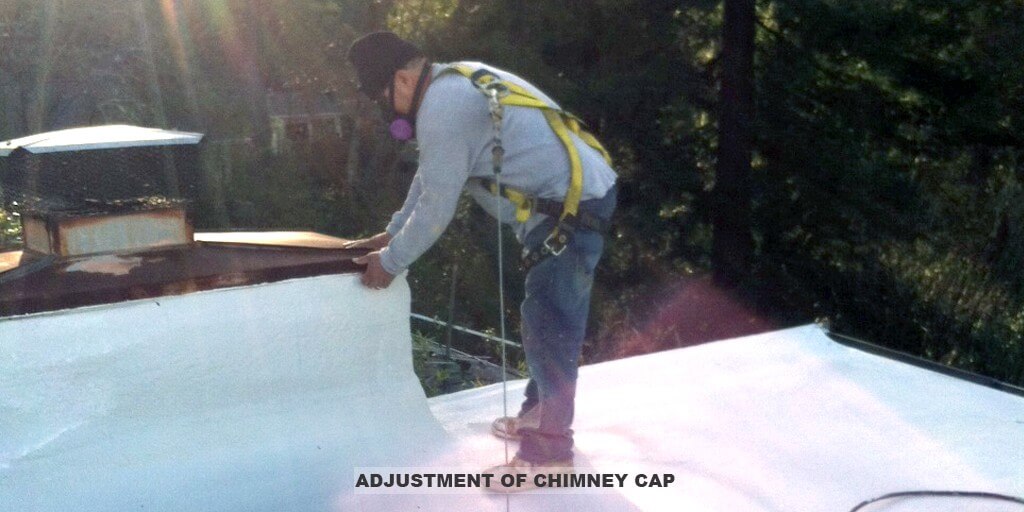
When you identify damage, document it thoroughly with photos and measurements. This documentation not only helps professionals assess the situation but also creates a record of your roof’s condition over time, which is valuable for warranty claims and maintenance planning.
Foam Roofing Maintenance Tips for Bay Area Property Owners
Taking a proactive approach to foam roof maintenance can significantly extend its lifespan while reducing long-term costs. Here are practical steps Bay Area property owners can safely perform themselves between professional inspections.
Keep Your Foam Roof Clean
One of the simplest yet most important maintenance tasks for a foam roof is keeping it clean. This means clearing off any leaves, dirt, or other debris that accumulates. Debris can hold moisture against the roof surface and potentially damage the protective coating over time.
Manage Water Flow
Even more critical is managing water. Flat and low-sloped roofs, common in the Bay Area, can be prone to drainage issues. You need to make sure water is flowing off the roof properly. Check your drains, outlets, and gutters at least twice a year to ensure they aren’t clogged with debris. Blocked drains can cause standing water, which, while foam roofs can handle it without immediate damage to the system itself, is still best to avoid. Ensuring water flows freely helps protect the protective coating and the overall roof integrity. This proactive cleaning and drainage check goes a long way in preventing potential moisture-related problems like leaks or mildew.
Maintenance Log
Maintain a roof log to track conditions and changes over time. After each inspection, note observations, take dated photos, and record any maintenance performed. This documentation proves invaluable when working with professionals and helps you recognize developing issues by comparing current conditions with previous observations.
Protect Your Foam Roof with Walkways
Creating designated walkways protects your foam roof from unnecessary wear. Use protective mats or install walkway pads in areas that require regular access for HVAC maintenance or other equipment servicing. This simple step prevents the compression damage that often leads to ponding water and premature coating failure.
Protect Your Roof from Tree Damage
Trim overhanging branches to maintain a clearance of at least 6 feet above your roof. This reduces debris accumulation and eliminates the risk of branches scraping against and damaging the roof surface during the Bay Area’s occasionally strong winds, particularly in hillside areas like Berkeley or San Rafael.
Addressing Damages Without Delay
Foam roofing is tough with exceptional water protective qualities. For example, a branch would need to completely puncture through to the substrate for water to infiltrate the living space, which is quite rare. It’s also highly resistant to wind, rain, and other damaging weather conditions. This durability helps protect your property from the Bay Area’s varied climate, including occasional storms.
However, even a super-durable roof can get nicked or damaged. If you do notice any kind of damage to the protective coating during your inspections – maybe a small crack, a puncture, or a hole – it should be repaired immediately. Even a small breach in the coating can expose the foam layer to UV rays and moisture, leading to degradation over time. Prompt repairs prevent the damage from spreading and protect the underlying foam and the roof structure. Calling a professional right away to assess and fix any damage is key to maintaining the seamless, waterproof barrier.
The Essential Role of Recoating
While regular cleaning and inspections handle minor upkeep, the big periodic maintenance item for a foam roof is recoating. This isn’t something you do every year; recoating is needed approximately every 15-20 years. This step is vital for the long-term health of your foam roof.
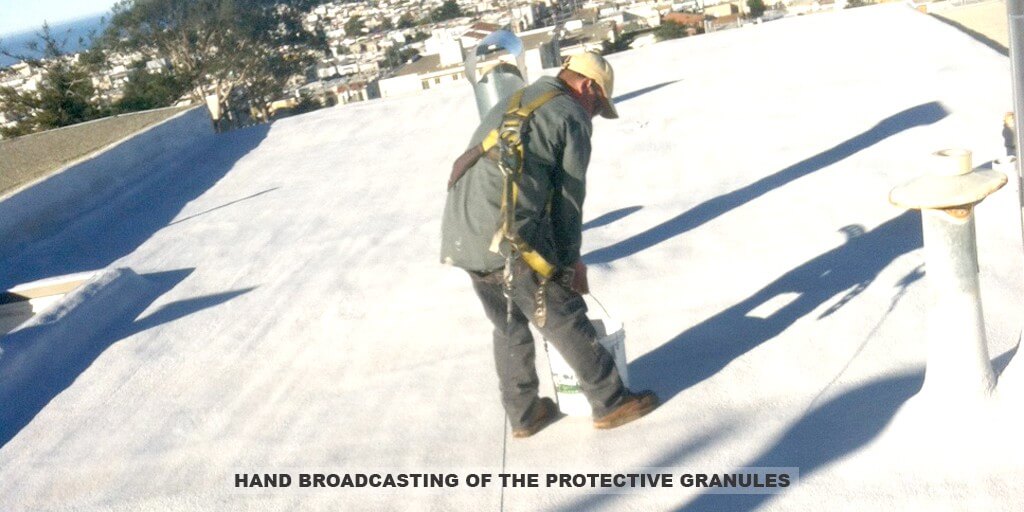
The primary purpose of the recoating is to refresh the protective elastomeric layer that shields the polyurethane foam from the elements. UV radiation from the sun is the main culprit that causes this coating to break down over many years. If the coating isn’t reapplied, the exposed foam underneath will start to degrade. While foam is durable, prolonged exposure without the coating will eventually compromise its integrity. Recoating essentially gives your roof a fresh shield, preserving its performance, extending its lifespan, and ensuring it continues to protect your home or business effectively against Bay Area weather. It’s a critical investment in your roof’s future, helping it last potentially a lifetime.
Maximize Benefits Through Proper Maintenance
Proper maintenance isn’t just about fixing problems; it’s about making sure you enjoy all the amazing benefits that foam roofing is known for. Foam roofing offers excellent waterproofing, creating a seamless, monolithic barrier that prevents leaks and moisture damage, which is a major concern for owners of flat and low-sloped roofs. By keeping the protective coating intact through regular maintenance and recoating, you preserve this critical waterproof quality.
Beyond waterproofing, SPF is incredibly energy-efficient, described as over 500% more efficient than conventional roofs. This superior insulation helps keep your property cooler in the summer and warmer in the winter, potentially reducing heating and cooling costs by up to 40%. Research even suggests the energy savings can pay for the cost of the foam roof itself within 3 to 4 years. Maintenance ensures the insulating layer remains protected and effective, helping you continue to enjoy lower energy bills and increased indoor comfort. It also helps minimize mold growth by managing moisture and keeping the roof surface temperature consistent.
Why Trust the Experts with Your Foam Roof
While you can handle the basic cleaning and inspections yourself, key maintenance tasks like significant repairs or recoating are best left to professionals. Installing and maintaining foam roofing requires specialized training, skill, and the right equipment. A properly installed foam roof from a skilled contractor can last a lifetime.
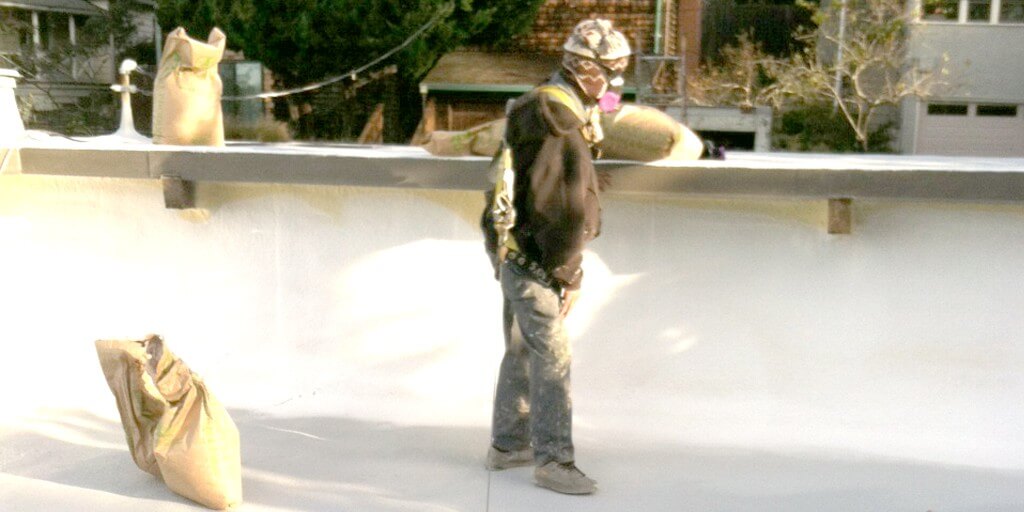
Armstrong Foam Roofing has been working with roofs in the Bay Area since 1966, and has over 40 years of experience specifically with foam roofing. We use high-quality, 3LB density foam which offers high insulation values, strength, and longevity. We are confident in our installation process, designed to ensure excellent results and proper installation under correct conditions. We also offer comprehensive warranties, including 15-year warranties on foam roofs installed to manufacturer specifications. When it’s time for recoating or if you notice damage you can’t handle, choosing an experienced local company like Armstrong ensures the work is done correctly, protecting your valuable investment.
Choose Armstrong for Your Foam Roofing Needs
Whether you’re considering a new foam roof or need help maintaining your existing one, choosing the right contractor is key. Armstrong Foam Roofing is a family-owned business that’s been serving the San Francisco Bay Area for decades. We have extensive experience with flat and low-sloped roofs, including Eichler homes. With our commitment to quality materials, skilled professionals, and dedication to customer satisfaction, you can trust us to provide high-quality service for your foam roofing system.

Ready to ensure your foam roof is properly maintained or explore the benefits of SPF roofing for your property? Contact Armstrong Foam Roofing today for a free roof inspection, consultation and estimate! We offer convenient options like Satellite Roof Estimates, remote consultations (phone, computer, Skype, email), and outside-the-home estimates.
Frequently Asked Questions About Foam Roof Maintenance
Q1. What should I specifically look for during my inspections?
Look for debris, signs of standing water, and any damage to the top protective coating, like cracks, punctures, or holes. Also, check if drains and gutters are clear.
Q2. How often does the protective coating need to be reapplied?
Recoating is typically needed approximately every 15-20 years to protect the foam from UV damage and the elements.
Q3. What are the signs that my foam roof needs recoating?
Key indicators include: chalking (a powdery residue when you rub the surface), surface crazing or cracking, areas where the coating has worn thin, revealing the darker foam beneath, loss of reflectivity (roof appears darker than when originally coated), and brittleness of the coating when gently pressed. If you notice these signs, arrange for a professional evaluation promptly.
Q4. What happens if I ignore maintenance?
Neglecting maintenance, especially recoating, can lead to the breakdown of the protective layer and the degradation of the underlying foam, potentially compromising the roof’s waterproofing and insulation over time.
Q5. Can I walk on my foam roof for inspections?
Yes, foam roofs can support careful foot traffic for inspections, but minimize this to prevent unnecessary compression damage. Wear soft-soled shoes, avoid walking on the same paths repeatedly, and stay completely off the roof during extreme heat when the foam may be softer. For regular maintenance access, consider installing designated walkway pads along common travel routes.
Q6. Can I clean the roof or make minor repairs myself?
Basic cleaning of debris and ensuring drains are clear can often be done by the property owner. However, any repairs to the coating or issues with the foam itself should be handled by experienced foam roofing professionals.