

Living or working in an urban environment like the San Francisco Bay Area often means dealing with a constant symphony of urban sounds: honking cars, bustling streets, overhead airplanes, and ongoing construction. This relentless noise isn’t just annoying; it can impact your concentration, stress levels, and overall comfort. For both homeowners and business owners, finding a way to create a peaceful indoor environment is a significant challenge and a common concern.
At Armstrong Foam Roofing, we’ve helped countless property owners transform their noisy spaces into peaceful havens using advanced closed-cell spray foam technology. Spray foam roofing isn’t just about keeping rain out – it’s about creating a sound barrier that can achieve significant noise reduction and dramatically improve your quality of life and work environment.
Understanding the Science: How Sound Travels and Why Traditional Roofs Fail
Sound travels in waves, much like ripples in a pond. When these sound waves hit your roof, they need somewhere to go. Traditional roofing materials like asphalt shingles, metal, or tile are relatively thin and hard, which means they don’t absorb sound effectively. Instead, they often reflect or transmit these sound waves directly into your building.
Think of it like this: if you clap your hands in an empty room with hard walls, you hear an echo. That’s the sound bouncing around. Now imagine clapping in a room full of thick cushions – the sound gets absorbed and muffled. Spray foam roofing acts like those cushions for your entire building.
Closed-cell spray foam creates a dense, continuous barrier that’s typically 2-4 inches thick. This thickness, combined with the foam’s cellular structure, gives sound waves multiple surfaces to bounce against and lose energy, rather than passing straight through to disturb you inside.
The Bay Area Noise Challenge: What We’re Up Against
The San Francisco Bay Area presents unique acoustic challenges that make effective sound control essential for comfortable living and working. Our region’s dense urban environment creates a perfect storm of noise pollution that affects millions of residents and workers daily.

Traffic Noise: With major highways like I-101, I-280, and I-880 crisscrossing the region, constant vehicle noise is unavoidable. The sound of engines, brakes, and tires on pavement creates a steady hum that can reach 70-80 decibels – equivalent to a garbage disposal running continuously.
Aircraft Activity: Living near San Francisco International Airport, Oakland International Airport, or San Jose International Airport means dealing with frequent airplane noise. Commercial aircraft can generate 130-140 decibels during takeoff, while even smaller planes create a significant disturbance.
Construction and Development: The Bay Area’s booming construction industry means constant hammering, drilling, and heavy machinery operations. These sharp, intermittent sounds can be particularly disruptive because they’re unpredictable and can spike to over 100 decibels.
Urban Activity: From delivery trucks making early morning rounds to late-night entertainment districts, city life generates continuous background noise that can make it difficult to sleep, concentrate, or simply relax in your own space.
What Exactly is Spray Foam Roofing (SPF)?
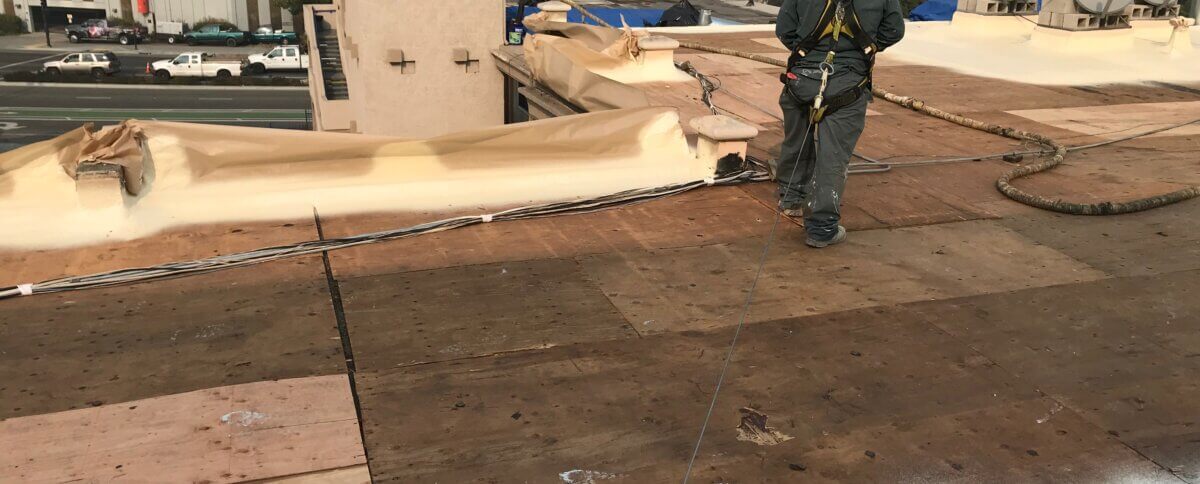
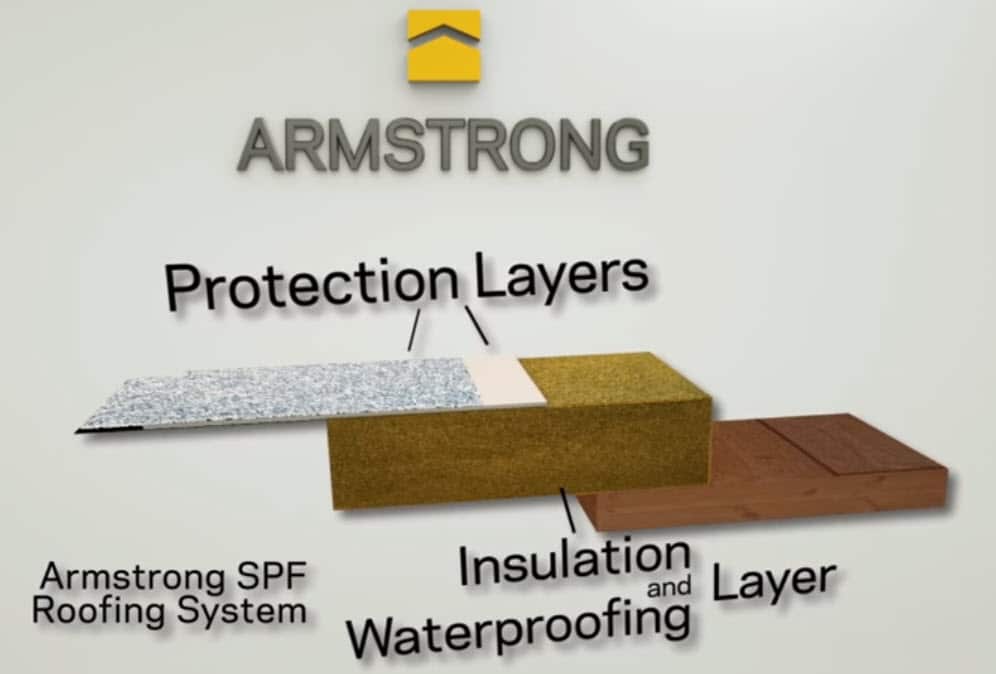
Spray Polyurethane Foam (SPF), commonly known as foam roofing, is a modern roofing system applied as a liquid onto your existing roof or new substrate. Once sprayed, the foam rapidly expands up to 30 times its original volume to fill every gap and crevice, creating a single, seamless, and completely waterproof layer. This layer is then finished with a protective coating and ceramic granules, shielding it from the sun’s UV rays and enhancing its toughness. Armstrong Foam Roofing utilizes closed-cell foam, specifically a durable 3LB density foam, known for its exceptional properties.
How Closed-Cell Spray Foam Absorbs and Dampens Sound
Closed-cell spray foam roofing works as an acoustic barrier through several scientific principles that work together to reduce noise transmission. Understanding these mechanisms helps explain why this solution is so effective compared to traditional roofing materials.
Mass and Density
Closed-cell foam is significantly denser than open-cell foam, typically weighing 2-3 pounds per cubic foot. This added mass helps block sound transmission by providing more material for sound waves to penetrate. Heavier materials generally perform better at stopping sound.
Cellular Structure
The foam consists of millions of tiny, closed air pockets. When sound waves enter this structure, they bounce between these cells, losing energy with each collision. This process, called acoustic dampening, converts sound energy into tiny amounts of heat that dissipate harmlessly.
Continuous Coverage
Unlike traditional insulation that can have gaps, spray foam creates a seamless, monolithic barrier. Sound waves can’t find weak points or gaps to slip through, making the entire roof surface an effective sound barrier.
Thickness Advantage
Most spray foam applications are 2-4 inches thick, providing substantial material depth for sound absorption. The thicker the application, the more effective it becomes at stopping lower frequency sounds like traffic rumble and aircraft noise.
Specific Noise Types That Spray Foam Mitigates
Different types of urban noise require different approaches to control effectively. Spray foam roofing excels at managing multiple categories of unwanted sound that plague Bay Area properties and achieves significant noise reduction.
Low-Frequency Traffic Rumble
The constant hum of highway traffic, particularly from large trucks and buses, creates low-frequency vibrations that can penetrate traditional roofing materials easily. Spray foam’s dense cellular structure effectively absorbs these longer sound waves, reducing that persistent traffic drone that makes it hard to concentrate or sleep.
High-Frequency Aircraft Noise
Jet engines create high-pitched whining sounds along with deep rumbles. The varied cellular structure in spray foam handles both frequency ranges well, significantly reducing the sharp sounds of aircraft passing overhead while also dampening the lower rumbling noise.
Impact Noise from Weather
Heavy rain, hail, and wind can create significant noise on traditional metal or tile roofs. Spray foam’s cushioning effect dramatically reduces these impact sounds, making storms much less disruptive to indoor activities.
Construction and Industrial Sounds
Sharp, intermittent noises from nearby construction, manufacturing, or industrial operations are particularly jarring. Spray foam helps smooth out these sound spikes, making the acoustic environment more consistent and less stressful.
Benefits for Residential Properties: Creating Your Urban Sanctuary
Bay Area homeowners face unique challenges when trying to create peaceful living spaces in our dense urban environment. Spray foam roofing addresses these challenges head-on, providing benefits that extend far beyond basic weather protection, helping you achieve noise reduction and improve your quality of life.
Improved Sleep Quality
Nothing ruins a good night’s sleep like being jolted awake by early morning garbage trucks or late-night traffic noise. Homeowners who install spray foam roofing report significantly better sleep quality, with fewer disruptions from external noise. This improvement in rest quality has cascading benefits for health, productivity, and overall quality of life.
Enhanced Home Office Productivity
With remote work becoming increasingly common, having a quiet home office space is essential. Spray foam roofing reduces distracting external noise, making it easier to focus during video calls, concentrate on important tasks, and maintain professional acoustics for virtual meetings.
Increased Property Value
Quiet homes are more desirable in noisy urban markets. Properties with effective noise control features often command higher prices and sell faster than comparable homes without these amenities. Spray foam roofing represents an investment that pays dividends in comfort and eventual resale value.
Better Indoor Entertainment
Whether you’re watching movies, listening to music, or hosting gatherings, external noise can be incredibly disruptive. Spray foam roofing creates a more controlled acoustic environment where you can enjoy entertainment at reasonable volumes without competing with street noise.
Commercial and Industrial Applications: Protecting Your Business Environment
Noise pollution doesn’t just affect homes, it can seriously impact business operations, employee productivity, and customer satisfaction. Commercial and industrial property owners in the Bay Area face unique acoustic challenges that spray foam roofing can effectively address.
Office Buildings
Open-plan offices are particularly susceptible to external noise distraction. Traffic, construction, and aircraft noise can reduce employee productivity, increase stress levels, and make phone calls and meetings difficult. Spray foam roofing creates a quieter work environment that supports focus and professionalism.
Manufacturing Facilities
Industrial operations often generate internal noise, but external sounds can still be problematic, especially for quality control processes that require concentration. Additionally, some manufacturing processes are sensitive to vibration and acoustic disturbance from outside sources.
Restaurants and Hospitality
Diners don’t want to shout over traffic noise while trying to enjoy a meal. Hotels need to provide guests with restful environments despite urban location. Spray foam roofing helps create the peaceful atmosphere that’s essential for customer satisfaction in hospitality businesses.
Healthcare Facilities
Hospitals, clinics, and medical offices require quiet environments for patient care and recovery. External noise can interfere with medical equipment, disrupt patient rest, and create stressful environments that impede healing.
More Than Just Quiet: The Multifaceted Benefits of SPF
Beyond its impressive sound-dampening qualities, SPF roofing offers numerous other benefits that make it a smart investment:
Exceptional Energy Efficiency
It’s over 500% more efficient than conventional roofs, capable of reducing heating and cooling costs by up to 40%. Studies suggest energy savings can recoup the initial cost within 3 to 4 years.
Long-Lasting Durability
With proper care, SPF roofs can last a lifetime, only requiring recoating every 15-20 years to maintain peak performance. They withstand extreme weather, including high winds and hail.
Seamless Waterproofing
The monolithic application eliminates seams and joints, common leak points in traditional roofs, providing an impenetrable barrier against water and preventing ponding.

Lightweight Design
Weighing approximately 60 lbs per 100 square feet (compared to 600 lbs for traditional systems), it adds minimal stress to older structures and often allows for installation directly over existing roofs, reducing waste and labor costs.
Eco-Friendly Choice
SPF is a sustainable “cool roof” solution that reflects solar heat, reduces the urban heat island effect, and minimizes landfill waste due to less frequent tear-offs.
Why Armstrong Foam Roofing is Your Sound Solution
Choosing the right contractor for SPF roofing is crucial, as the system’s performance relies heavily on expert installation. Armstrong Foam Roofing brings over 40 years of experience to the San Francisco Bay Area, proudly serving the community since 1966. We’ve installed more residential foam roofing systems than any other company in America. and are committed to quality, backed by comprehensive 15-year warranties. Our meticulous 10-step installation process ensures exceptional, long-lasting results.
Ready for a Quieter Future? Stop letting urban noise disrupt your peace and productivity. Invest in a cutting-edge roofing solution that offers unparalleled sound dampening, energy efficiency, and long-term protection. Contact Armstrong Foam Roofing in the San Francisco Bay Area today for a free consultation and estimate! Call us at +1 (877) 777-1234 or contact us online now!
Frequently Asked Questions About Foam Roofing & Noise
Q1. How long can I expect a foam roof to last, and does its soundproofing ability diminish over time?
With proper installation and maintenance, a spray foam roofing system can protect your home for a lifetime. Its soundproofing capabilities, being inherent to the foam’s stable physical properties, do not diminish over time, especially with periodic recoating every 15-20 years to maintain its protective layers.
Q2. Is foam roofing a good solution for historic buildings like Eichler homes to reduce noise?
Yes, SPF roofing is an ideal solution for historic homes, including Eichler homes, which are known for their mid-century modern design and often low-sloped roofs. Its lightweight nature reduces stress on older structures, and its seamless, low-profile application preserves the architectural aesthetic while providing superior sound insulation and protection.
Q3. How much noise reduction can I expect from spray foam roofing?
Most properties see a 10-20 decibel reduction in external noise transmission, which represents a significant improvement in acoustic comfort. The exact reduction depends on existing roof construction, noise sources, and foam thickness.
Q4. Will spray foam roofing completely eliminate all outside noise?
While spray foam dramatically reduces noise transmission, it won’t eliminate all sound. Very loud, sudden noises may still be audible, but they’ll be significantly muffled and less jarring than with traditional roofing.
Q5. How long does spray foam roofing installation take?
Most residential installations can be completed in 1-2 days, while larger commercial projects may take several days. Weather conditions and roof complexity can affect timing.
Q6. How does spray foam perform in Bay Area weather conditions?
Spray foam performs excellently in our Mediterranean climate. It handles temperature fluctuations well, provides superior waterproofing, and doesn’t degrade from UV exposure when properly coated.
Q7. Can spray foam be applied over existing roofing materials?
In many cases, yes. Spray foam can often be applied directly over existing roofing, which reduces waste and installation costs. We evaluate each situation individually.