

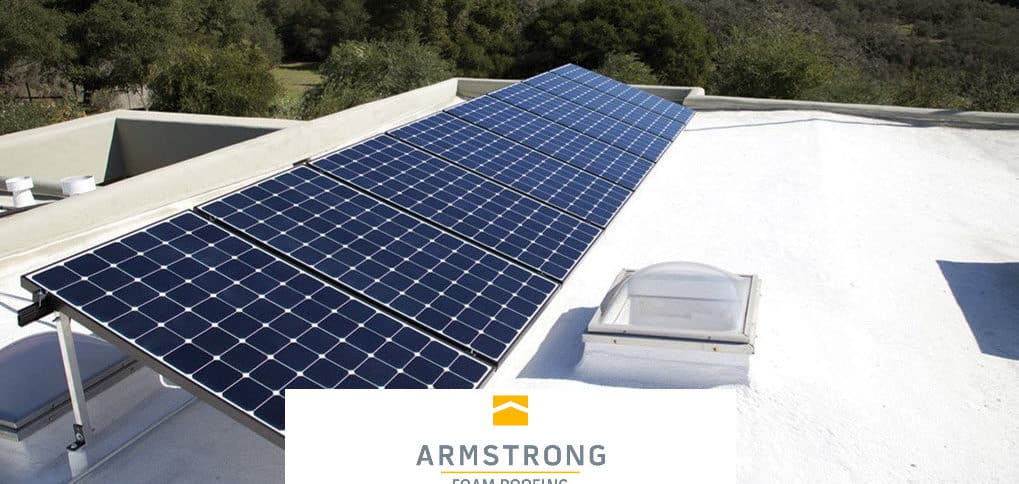
Imagine a roof that not only protects your property from the elements but also serves as a robust foundation for modern rooftop amenities like solar panels or even lush gardens. For residential, commercial, and industrial property owners in the San Francisco Bay Area, this isn’t just a dream. Spray polyurethane foam (SPF) roofing offers a high-performance solution, transforming flat and low-sloped roofs into versatile spaces. With its exceptional strength, waterproofing, and energy-saving capabilities, as a foam roofing base, it is proving to be the ideal choice for integrating these valuable additions.
The Foundation: Understanding Spray Polyurethane Foam (SPF) Roofing
Spray foam roofing, commonly known as SPF, is a highly effective roofing system that involves applying a specialized polyurethane foam layer directly onto your roof surface. This liquid foam expands significantly upon application, filling every nook, cranny, and gap to create a completely seamless, monolithic barrier. Unlike traditional multi-layered roofs, this single, continuous layer eliminates common points of failure like seams and joints, which are often susceptible to leaks and water intrusion.
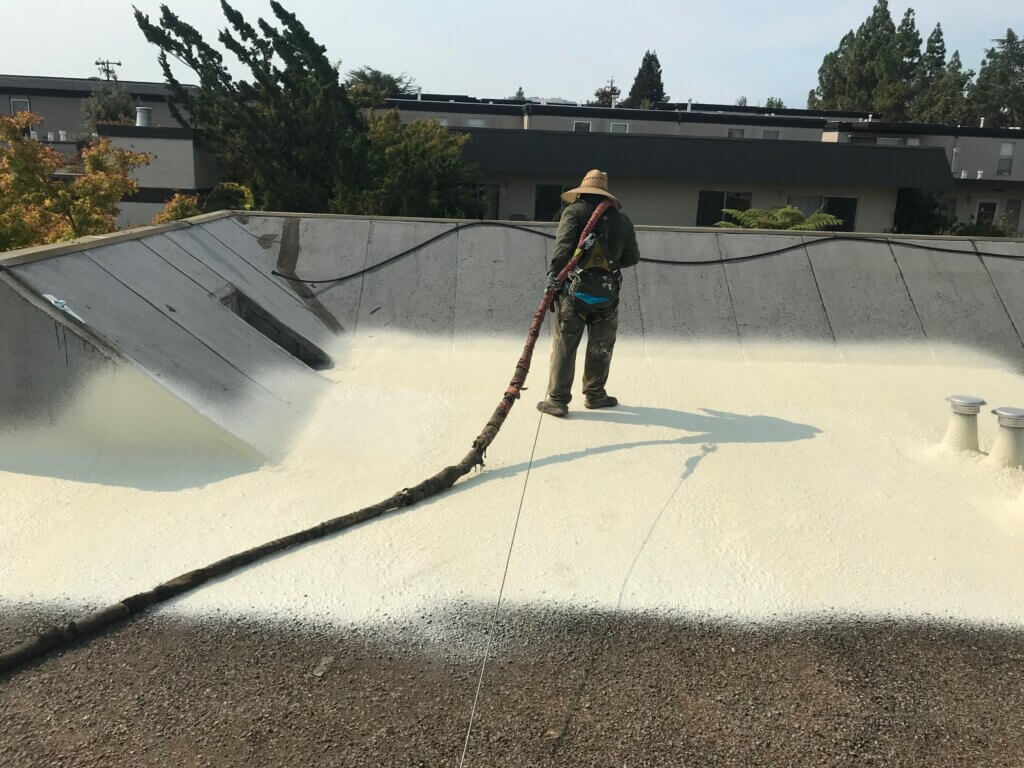
Armstrong Foam Roofing utilizes a closed-cell foam rated at 3LB density. This type of foam is tightly packed, preventing air and moisture from penetrating, making it exceptionally rigid and stable. After the foam layer, typically around 1 ½ inches thick, is applied, it’s covered with two coats of an elastomeric protective coating and ceramic granules. This crucial top layer shields the foam from the sun’s harsh UV rays, which can otherwise degrade the material over time, ensuring your roof’s integrity for decades.
Built to Last: Durability for Foot Traffic and Rooftop Equipment
One common concern for any flat roof is its ability to withstand regular foot traffic and the weight of rooftop equipment like HVAC units and skylights. SPF roofs installed by Armstrong Foam Roofing are designed to be remarkably durable. The 3LB density closed-cell foam is rigid enough to be walked on without damage, provided appropriate soft-soled shoes are worn.
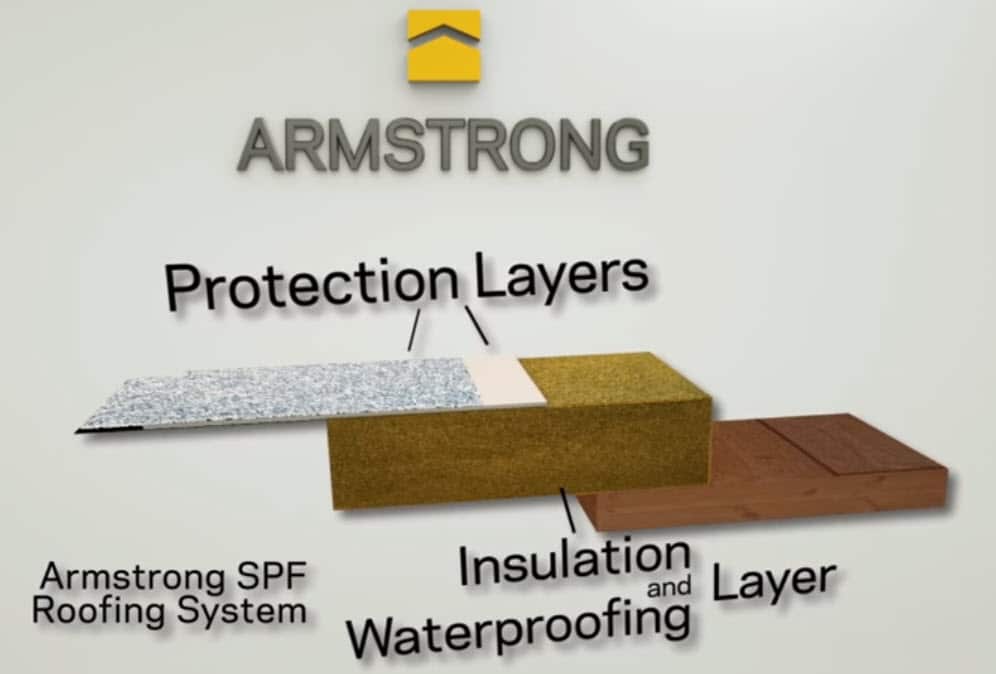
This inherent strength means that technicians can safely access and service equipment on your roof without compromising its integrity. Furthermore, SPF roofing systems offer superior resistance to impacts, hail, and high winds. Even in the rare event of a puncture, the closed-cell nature of the foam means that any damage remains localized, preventing water from spreading horizontally and making repairs simple and cost-effective.
Beyond Basic Protection: Waterproofing for Advanced Rooftop Systems
For property owners considering adding features like solar panels or green roofs, paramount concerns are waterproofing and preventing leaks. Traditional roofing systems often struggle with flashing around complex rooftop features, leading to common leak points. SPF roofing excels in this area because of its seamless application and ability to self-flash.

As SPF is sprayed, it conforms precisely to any surface, effectively sealing around vent pipes, skylights, and other equipment without joints or fasteners. This creates an impenetrable, watertight barrier, significantly reducing the risk of water infiltration that can plague multi-layered roofing systems. This robust waterproofing is critical for supporting other rooftop installations, as it minimizes the risk of water damage to both the building and the new systems.
Powering Up: Solar Panels on SPF Roofs
Solar panels are an excellent way to reduce energy costs and contribute to sustainability, but their installation on flat roofs, particularly on older structures like Eichler homes, can present challenges. Many Eichler homes were originally built with heavy tar and gravel roofs, which already put a significant weight burden on the roof structure. Adding heavy solar arrays to these roofs can exacerbate existing structural concerns and lead to sagging or damage.
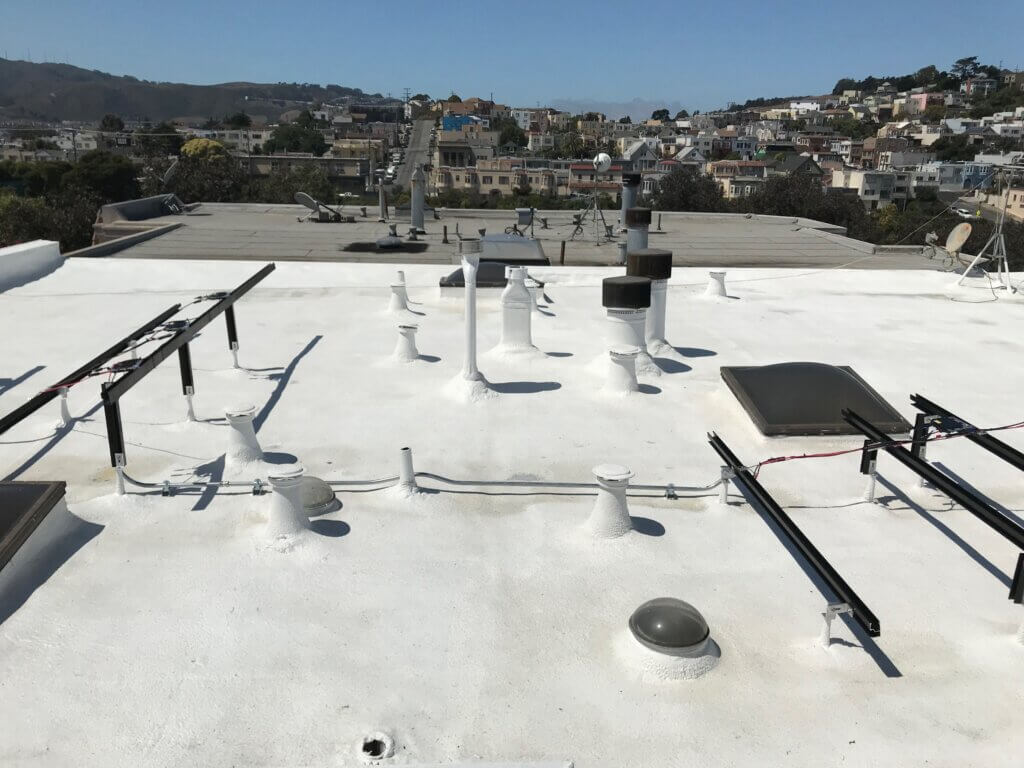
Armstrong’s SPF roofing offers a lightweight yet incredibly strong solution. Weighing only about 60 pounds per 100 square feet compared to hundreds of pounds for traditional systems, SPF significantly reduces the load on your building’s framework. This lightweight advantage, combined with SPF’s superior adhesion and durability, makes it an ideal base for securely mounting solar panel arrays without overstressing the underlying structure. For Eichler homeowners, upgrading to SPF roofing provides a modern solution that respects the original aesthetic while offering a stable, long-lasting platform for energy-generating solar technology.
Green Spaces Above: The Potential for Rooftop Gardens
Imagine turning your flat roof into a vibrant green oasis. While full-scale green roofs can be very heavy, lightweight green roof systems are becoming more popular, and SPF roofing is an excellent choice to support them. SPF’s seamless, waterproof barrier is essential for containing moisture, which can be a significant problem for traditional green roofs.

Essential Requirements for Garden Success
The building’s structure must be engineered to handle the additional weight of soil, plants, water, and foot traffic. This means consulting with a structural engineer before any garden installation begins. The loads from a rooftop garden are significantly different from typical roof loads, requiring careful calculation and often structural reinforcement.
SPF roofing provides excellent waterproofing, but it’s not designed to withstand root penetration or heavy abrasion from garden materials. This means installing protective layers above the foam system, including root barrier membranes and sometimes additional protective layers to prevent damage from soil and maintenance activities.
The Critical Protection System
A proper drainage system becomes absolutely crucial with rooftop gardens. Water pooling can damage both the foam and the building structure beneath. Professional installations typically include drainage mats and filter fabric systems positioned above the SPF roofing to manage water flow effectively.
The foam’s elastomeric coating must be upgraded to high-durability specifications designed to withstand contact with garden materials. Standard coatings may not provide adequate protection against the physical demands of soil, roots, and maintenance activities.
Smart Solutions: Modular Garden Systems
The safest approach for SPF roofing involves modular green roof systems that sit above the spray foam assembly. These systems include integrated root barriers, drainage components, and growing media while remaining removable for roof maintenance. This approach minimizes risk to the underlying SPF roof while providing the green space benefits property owners desire.
For commercial properties, these modular systems can improve employee satisfaction and building aesthetics while reducing urban heat island effects. Residential property owners can create personal gardens with vegetables, herbs, or decorative plants without compromising their roof’s integrity when systems are properly designed and installed by qualified professionals.
Economic & Environmental Wins: The Long-Term Value
Investing in SPF roofing by Armstrong Foam Roofing offers substantial long-term value. One of the most significant benefits is its exceptional energy efficiency, being over 500% more efficient than conventional roofs. This superior insulation can drastically reduce heating and cooling costs, often by as much as 40-50%. In fact, energy savings from SPF roofing can typically recoup its initial cost within 3 to 4 years.
Beyond savings, SPF is a sustainable and eco-friendly choice. It often eliminates the need for costly and wasteful roof tear-offs, as it can be applied directly over many existing single-layer roofs. This dramatically reduces landfill waste. Furthermore, SPF systems contribute to a greener environment by lowering your carbon footprint and mitigating the urban heat island effect.
Choosing Your Roofing Partner: Why Armstrong Foam Roofing Stands Out
The performance of an SPF roof hinges heavily on the skill and experience of the installer. Armstrong Foam Roofing brings over 40 years of specialized experience in the San Francisco Bay Area, having installed more residential foam roofing systems than any other company in America.
Our detailed 10-step installation process ensures every roofing system is applied correctly and under ideal conditions for a lifetime of performance. We manage necessary permits and take precautions to minimize overspray, ensuring a professional and compliant installation. As a family-owned business proudly serving the Bay Area since 1966, Armstrong prioritizes customer satisfaction and stands behind its work with some of the best and longest-lasting warranties available in the SPF roofing industry, typically 15 years.
Transform Your Rooftop with SPF
Whether you’re a homeowner looking to add solar panels, an Eichler owner seeking a stable foundation for modern upgrades, or a commercial property manager aiming for long-term operational efficiency, SPF roofing provides an unparalleled solution. Its combination of strength, seamless waterproofing, lightweight design, and energy efficiency makes it the ultimate base for integrating valuable rooftop installations. This innovative roofing system offers not just protection but also enhanced property value, comfort, and significant environmental benefits for decades to come.
Ready to explore how SPF roofing can transform your property? Contact Armstrong Foam Roofing today for a free, no-obligation consultation and estimate. Let our experienced team help you unlock the full potential of your San Francisco Bay Area roof. Call us at 1-844-796-1234 or fill out our online form to schedule your free consultation!
Frequently Asked Questions
Q1. How does foam roofing prevent leaks around complex rooftop installations?
Unlike traditional roofs with seams and flashing that can fail, spray foam is applied as a liquid and expands to create a continuous, seamless, and monolithic barrier. This allows it to conform perfectly around skylights, vents, and other rooftop equipment, effectively eliminating leak points.
Q2. Is SPF roofing durable enough to withstand maintenance on rooftop equipment?
Yes, Armstrong’s SPF roofs are made with 3LB density closed-cell foam, which is robust and designed to withstand regular foot traffic from maintenance personnel working on HVAC units, skylights, and other systems. Even if minor damage occurs, it’s localized and easily repaired.
Q3. How does SPF roofing contribute to energy savings when adding solar panels or green roofs?
SPF roofing itself provides superior insulation, reducing heating and cooling costs significantly (up to 40-50%). This effect is enhanced when combined with cool-roof coatings that reflect sunlight. Adding solar panels further generates electricity, and a green roof can also help with temperature regulation, creating a highly energy-efficient system.
Q4. How often does an SPF roof need maintenance or recoating, especially with other installations on top?
SPF roofs require minimal maintenance, typically involving inspections twice a year (spring and fall) to check for debris or minor damage. The protective coating needs recoating approximately every 15-20 years to maintain its performance and protect the foam from UV degradation, ensuring the roof lasts a lifetime.
Q5. Can SPF roofing be applied over my existing roof, or does it require a tear-off?
In most cases, SPF roofing can be applied directly over your existing, structurally sound single-layer roof. This eliminates the need for expensive and time-consuming tear-offs, saving on labor, disposal costs, and reducing waste sent to landfills.