


When most property owners think about energy efficiency in roofing, they often focus on R-value – the measure of thermal resistance. While this is a crucial aspect of a high-performing roof, particularly with spray polyurethane foam (SPF) roofing, it only tells part of the story. The true genius of SPF roofing, which allows it to deliver exceptional benefits like being “over 500% more efficient than conventional roofs,” lies in its unique ability to create an unparalleled air seal, actively preventing air infiltration and exfiltration This seamless, monolithic barrier addresses a significant, yet often overlooked, factor in energy loss. This comprehensive sealing capability is what enables spray foam systems to deliver dramatically superior energy savings compared to traditional roofing materials, even when R-values appear similar on paper.

Understanding why spray foam roofing can be significantly more energy efficient requires looking beyond simple thermal resistance to examine the complete building envelope performance. According to research, as much as 40% of energy loss in buildings is due to air infiltration, making air sealing just as important as insulation value. We’d like to share with you information about how spray foam roofing’s unique properties create an integrated solution that addresses both thermal and air barrier needs simultaneously.
Understanding R-Value vs. Real-World Energy Performance
R-value measures a material’s resistance to heat flow, but it doesn’t account for air movement through and around the insulation. Traditional roofing materials like fiberglass batts or rigid foam boards may achieve high R-values in laboratory conditions, but their performance degrades significantly when air can move around or through them. This performance gap explains why buildings often fail to achieve their theoretical energy efficiency despite having adequate R-value ratings.
Spray foam insulation reduces HVAC sizing by 35% while maintaining comfort and efficiency, demonstrating how effective air sealing translates to real-world energy savings. When air leaks are eliminated, heating and cooling systems work more efficiently because they’re not constantly fighting against unwanted air exchange. This efficiency improvement goes far beyond what R-value calculations alone would predict.
The difference becomes even more pronounced in extreme weather conditions. During hot summers or cold winters, air infiltration can account for the majority of a building’s energy loss. A roof with a high R-value but poor air sealing will still allow conditioned air to escape and unconditioned air to enter, forcing HVAC systems to work overtime. This explains why building energy audits often reveal significant gaps between theoretical and actual energy performance.
The Science Behind Air Infiltration and Energy Loss
Air infiltration occurs when outdoor air enters a building through unintended openings, while exfiltration happens when indoor air escapes through these same pathways. This constant air exchange undermines a building’s energy efficiency by forcing heating and cooling systems to condition incoming air and replace the conditioned air that’s escaping. The energy penalty from air leakage often exceeds the energy loss from inadequate insulation.
The U.S. Environmental Protection Agency’s Energy Star program estimates that by adding insulation and sealing air leaks, you could save an average of 15% on monthly heating and cooling costs. This statistic highlights how air sealing contributes significantly to overall energy savings. Traditional roofing systems often have numerous penetrations, seams, and joints that create pathways for air movement, even when these openings are invisible to the naked eye.
Temperature differences between indoor and outdoor environments create pressure differentials that drive air movement through these openings. During winter, warm indoor air rises and escapes through roof penetrations, while cold outdoor air enters through lower openings. This “stack effect” can create significant air exchange rates that dramatically increase heating costs. The same principle applies in reverse during summer cooling seasons.
How Spray Foam Creates a Seamless Air Barrier
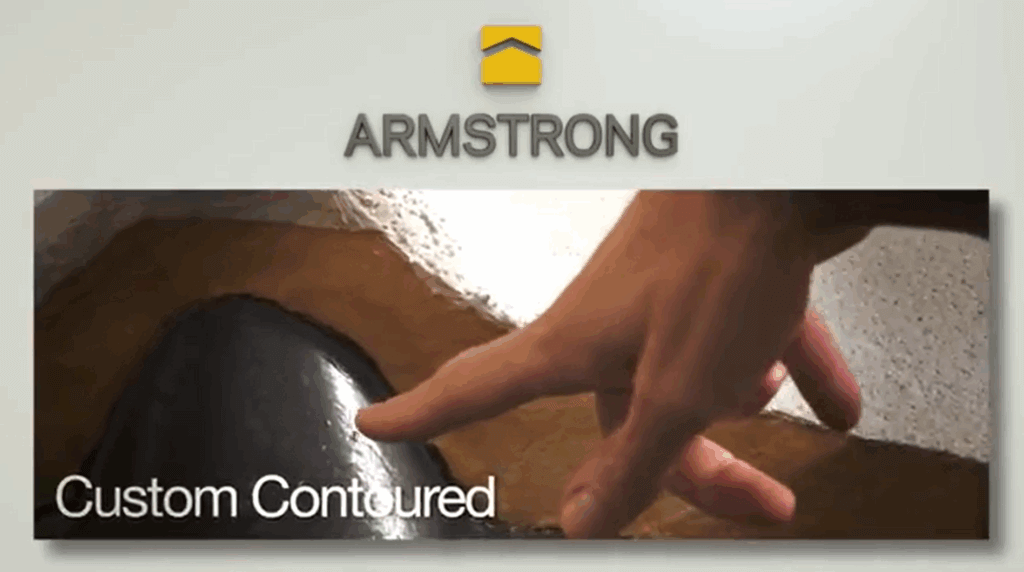
Spray foam’s unique application method allows it to expand 30 times its original volume and fill every crack, crevice, and irregular surface on a roof. Unlike traditional materials that come in predetermined sizes and shapes, spray foam conforms perfectly to the existing substrate, creating a continuous barrier without seams or joints. This seamless application eliminates the pathways that typically allow air infiltration in conventional roofing systems.
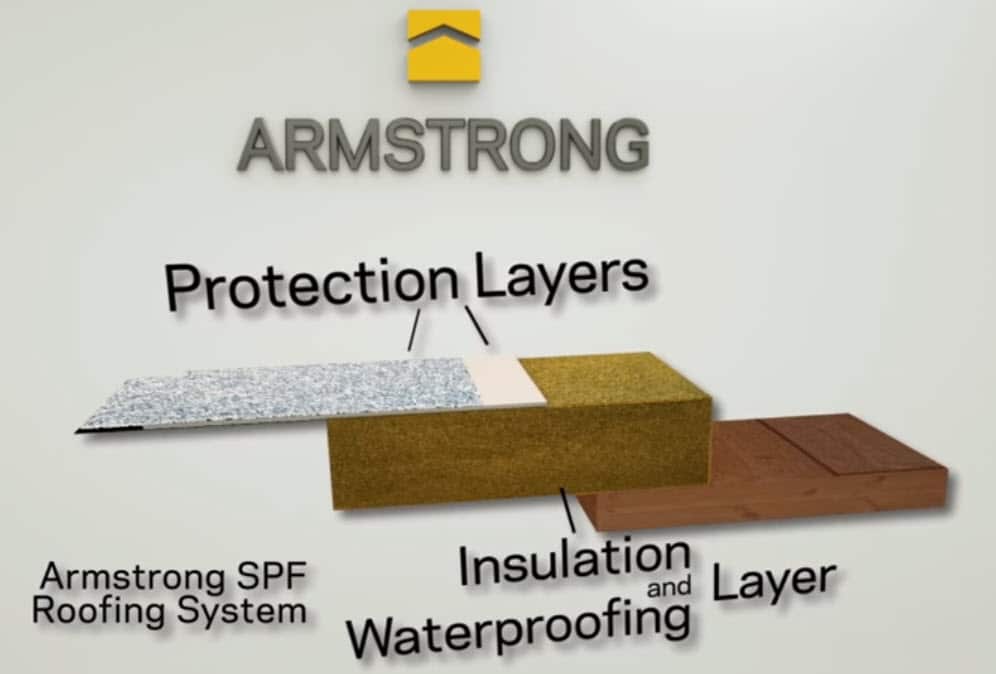
The expansion properties of spray foam are particularly important for achieving complete coverage. As the foam cures, it expands to fill spaces that would be impossible to reach with rigid materials. This expansion ensures that even the smallest gaps around roof penetrations, equipment curbs, and irregular surfaces are completely sealed. The result is a monolithic barrier that functions as insulation, air seal and waterproofing.
Spray foam significantly improves energy efficiency by creating a seamless air barrier that reduces heat loss and air leakage. This dual functionality means that property owners don’t need separate systems for insulation and air sealing. The spray foam application process addresses both requirements simultaneously, ensuring optimal performance and eliminating the potential for installation errors that could compromise either function.
The 500% Efficiency Claims Explained
Marketing claims about spray foam being “500% more efficient” than traditional materials often confuse consumers because they seem to contradict basic physics. However, these claims typically refer to the complete system performance rather than just thermal resistance. When air sealing is included in the efficiency calculation, spray foam’s advantages become much more dramatic than R-value comparisons alone would suggest.
The efficiency multiplier comes from the compound benefits of eliminating air infiltration. When a building has no air leaks, the heating and cooling systems can operate at their designed efficiency levels. Spray foam insulation can save around 50% or more in energy, with some systems achieving even higher savings when replacing severely compromised existing insulation systems.
Research by Texas A&M University has even shown that the energy savings from foam roofing can pay for its initial cost within an average of 3 to 4 years. This isn’t just about slowing down heat transfer; it’s about eliminating the “thermal bridging” and air bypass that undermine traditional insulation efforts. For property owners, this translates into tangible, year-round cost reductions and enhanced indoor comfort.
These dramatic efficiency improvements are most pronounced in buildings with high air change rates. A building that experiences multiple air changes per hour due to leakage will see enormous benefits from spray foam’s air sealing properties. The energy savings from eliminating unwanted air exchange can indeed be several times greater than the savings from improved R-value alone, particularly in challenging climates or buildings with high internal heat loads.
Residential Property Benefits: Comfort and Cost Savings
For homeowners in the San Francisco Bay Area, spray foam roofing offers immediate comfort improvements alongside long-term energy savings. The region’s varied microclimates mean that homes often experience significant temperature swings throughout the day, making effective air sealing particularly valuable. Spray foam’s ability to eliminate drafts and hot spots creates more consistent indoor temperatures throughout the home.
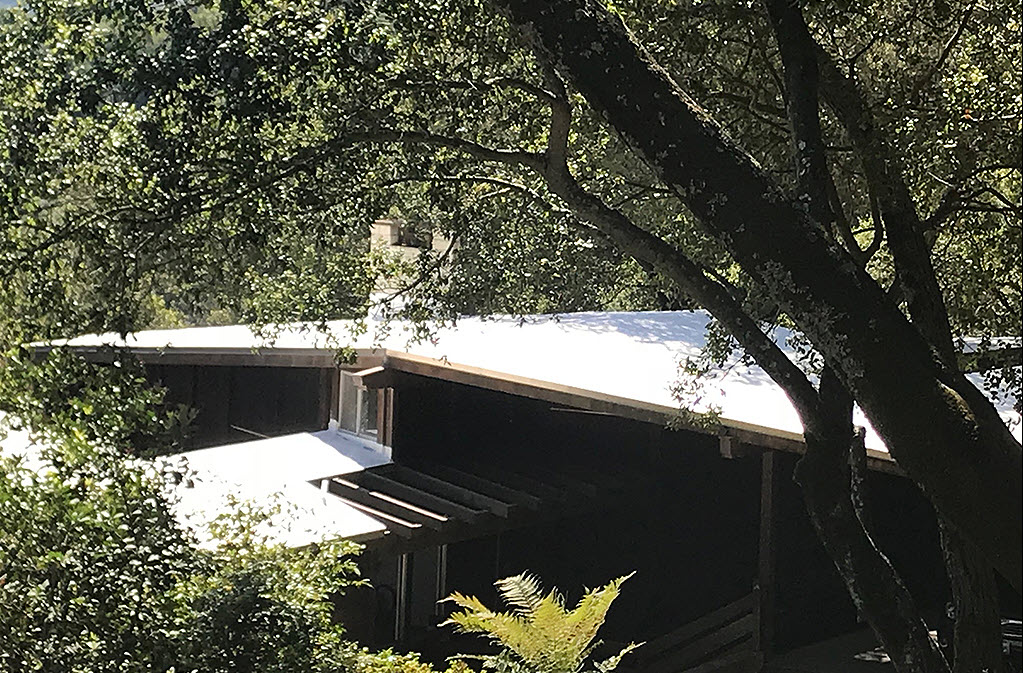
The energy savings translate directly to reduced heating and cooling bills, with many homeowners seeing reductions of 30-50%. These savings are particularly noticeable during the Bay Area’s hot summer afternoons when air conditioning systems typically struggle to maintain comfortable temperatures. With residential spray foam roofing, HVAC systems can maintain set temperatures more easily and run less frequently.
Beyond energy savings, spray foam roofing provides additional benefits that enhance property value and livability. The superior air sealing improves indoor air quality by preventing outdoor pollutants from entering through roof penetrations. This is especially important in the Bay Area, where seasonal wildfire smoke and urban air pollution can significantly impact indoor air quality. The seamless barrier created by spray foam helps maintain healthier indoor environments year-round.
Commercial Property Advantages: Operational Efficiency
Commercial property owners face unique challenges related to energy costs and operational efficiency. Large commercial buildings often have complex roof systems with numerous penetrations for HVAC equipment, electrical services, and other utilities. Each penetration represents a potential air leakage point that can compromise energy efficiency. Spray foam’s ability to seal around these penetrations without compromising functionality makes it particularly valuable for commercial applications.
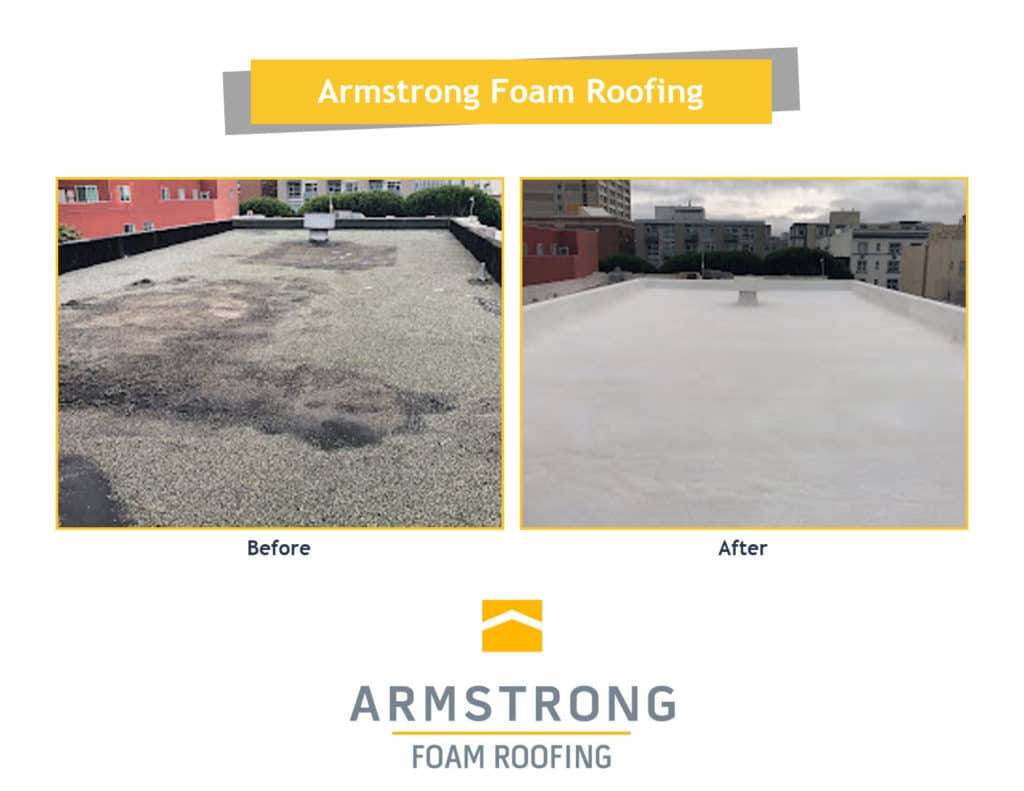
The energy savings from spray foam roofing can significantly impact a commercial property’s operating expenses. According to experts, about 55% of the energy used in buildings goes to heating and cooling, making HVAC efficiency improvements particularly valuable for commercial operations. The reduced energy consumption also helps buildings meet sustainability goals and potentially qualify for energy efficiency incentives or green building certifications.
Commercial property managers also benefit from spray foam’s durability and low maintenance requirements. The seamless application eliminates the joints and seams that typically require ongoing maintenance in traditional roofing systems. This reduces long-term maintenance costs and minimizes disruptions to business operations. Armstrong Foam Roofing’s commercial spray foam systems are designed to provide decades of reliable performance with minimal maintenance requirements.
Industrial Applications: Process Efficiency and Environmental Control
Industrial facilities have even more demanding requirements for energy efficiency and environmental control. Manufacturing processes often generate significant heat loads that must be managed efficiently, while temperature-sensitive operations require precise climate control. Spray foam roofing’s superior air sealing capabilities help maintain stable internal conditions that support efficient industrial operations.
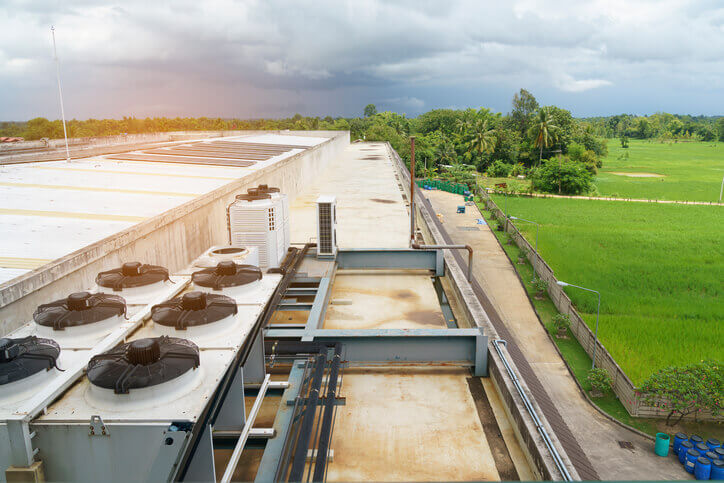
The elimination of air infiltration is particularly important for industrial facilities that maintain positive or negative pressure environments. Clean rooms, pharmaceutical manufacturing facilities, and food processing plants all require precise pressure control to maintain product quality and safety. Spray foam’s seamless air barrier helps these facilities maintain their required environmental conditions more efficiently and reliably.
Industrial property owners also benefit from spray foam’s ability to reduce peak cooling loads. The combination of high R-value insulation and complete air sealing can dramatically reduce the size of cooling equipment needed to maintain comfortable working conditions. This not only reduces initial capital costs but also lowers ongoing operational expenses. Armstrong Foam Roofing’s industrial spray foam systems are engineered to meet the demanding requirements of Bay Area industrial facilities.
Long-Term Performance and Durability Considerations
The longevity of Armstrong’s spray foam roofing systems makes them particularly attractive for property owners focused on long-term value. Unlike traditional roofing materials that may degrade over time and develop air leaks, properly installed spray foam maintains its sealing properties for decades. This long-term performance ensures that the energy efficiency benefits continue throughout the system’s lifespan.
The durability of spray foam roofing also protects against weather-related damage that can compromise air sealing in traditional systems. High winds, hail, and thermal cycling can create gaps and openings in conventional roofing materials. Spray foam’s flexibility and seamless application make it more resistant to these types of damage, helping maintain energy efficiency even in challenging weather conditions.
Why Armstrong: Expertise in Air-Sealed Foam Roofing
Choosing a qualified contractor is paramount, as the performance of a spray foam roof heavily depends on the skill of the installers. Armstrong Foam Roofing brings over 40 years of experience in installing SPF systems, having installed more residential foam roofing than any other company in America. We utilize 3LB density closed-cell foam, recognized as the highest quality roofing foam available, providing high insulation values, strength, and longevity.
Armstrong’s detailed 10-step installation process ensures proper application under correct conditions, backed by comprehensive 15-year warranties. We also handle necessary permits and minimize overspray, ensuring a professional and compliant installation. As a family-owned business serving the Bay Area since 1966, Armstrong prioritizes customer satisfaction and stands behind its work.
Investing in Long-Term Value and Comfort
Opting for Armstrong’s SPF roofing system is a smart investment that pays dividends in comfort, property value, and peace of mind. Beyond the immediate and significant energy cost reductions, the extended lifespan of the roof, minimal maintenance requirements, and the avoidance of costly tear-offs and structural damages contribute to a superior lifecycle cost. Furthermore, by choosing an SPF cool roof, you contribute to a greener environment by reducing greenhouse gas emissions and mitigating the urban heat island effect. This investment ensures a resilient, comfortable, and energy-efficient property for decades to come.
Contact Armstrong Foam Roofing Today!
Ready to experience unparalleled energy savings and lasting protection for your Bay Area property? Contact Armstrong Foam Roofing today for a free, no-obligation Satellite Roof Estimate or schedule a remote or at-home consultation. Let our experts show you how our proven foam roofing systems can transform your home or business, keeping you comfortable and saving you money for decades to come.
Frequently Asked Questions
Q1. Is spray foam roofing more expensive than traditional roofing materials?
While spray foam roofing may have higher upfront costs, the energy savings often offset the initial investment within 3-4 years. The long-term value includes reduced heating and cooling bills, lower maintenance costs, and extended roof life.
Q2. How long does spray foam roofing last?
Properly installed spray foam roofing systems can last over 50 years or even a lifetime with proper maintenance and a simple recoating every 15 to 20 years. The seamless application and durability of the material contribute to its exceptional longevity.
Q3. Does spray foam roofing work in the Bay Area’s climate?
Yes, spray foam roofing is particularly well-suited to the Bay Area’s moderate temperatures and occasional extreme weather events. The system’s flexibility and seamless application provide excellent performance in local conditions.
Q4. How does spray foam roofing compare to cool roofing technologies?
Spray foam roofing can incorporate cool roofing coatings for additional energy savings. The combination of superior air sealing and reflective coatings provides maximum energy efficiency.
Q5. Is spray foam roofing environmentally friendly?
Modern spray foam systems use more environmentally friendly formulations and provide significant energy savings that reduce overall environmental impact. The longevity of the systems also reduces waste compared to frequently replaced traditional materials.
Q6. Is closed-cell foam impenetrable by water, and how does it handle damage like punctures?
Yes, the closed-cell foam used in Armstrong’s SPF roofing is composed of millions of tiny, tightly packed cells that resist the penetration of water and vapor. If a puncture occurs, water is contained locally within the damaged area and does not spread horizontally throughout the roofing system, unlike damage in multi-layered roofs. This localized damage can be easily repaired without compromising the roof’s overall performance.
Q7. Is SPF roofing truly lightweight, and does it require costly tear-offs of existing roofs?
SPF roofing is remarkably lightweight, adding only about 0.5 to 0.75 pounds per square foot, whereas traditional built-up roofs can weigh around 6 pounds per square foot. This lightweight often allows for direct application over existing, structurally sound single-layer roofs, eliminating the need for expensive and waste-generating tear-offs, which saves time, labor, and environmental impact.
Q8. Are there concerns about off-gassing or toxicity with spray foam roofing once it’s installed?
Modern SPF systems are formulated to minimize off-gassing and comply with environmental regulations. Once cured, the polyurethane foam material is inert, non-toxic, and odorless, making it safe for both residential and commercial applications.
Q9. Does foam roofing provide sound insulation as well?
Yes, closed-cell spray foam provides excellent soundproofing capabilities, absorbing and dampening sound, which can reduce noise transmission from outside into the building.