

Flat roofs are a common choice for many residential and commercial buildings in the San Francisco Bay Area, as they offer a sleek and modern look, as well as more usable space on the roof and frankly, they are more affordable than sloped roofs. However, flat roofs also come with some unique challenges, especially in our local climate.
San Francisco’s unique climate, marked by mild temperatures, foggy mornings, and frequent rainfall, presents specific challenges for flat roofs. In this context, flat roofs need specialized solutions to address:
In San Francisco’s Mediterranean climate, with warm, dry summers and cool, wet winters, roofing materials endure significant stress. Temperatures fluctuate from 51°F to 67°F, leading to expansion and contraction that can cause cracks and leaks. Foam roofing offers a resilient solution, effectively countering these temperature-induced changes, unlike traditional built-up roofing systems.
The Bay Area is famous for its fog, which can cover the city for up to 106 days per year. The fog brings moisture and humidity, which can damage the roof surface and cause mold and mildew growth. Moisture can also seep into the roof layers and cause rot and decay, weakening the roof structure and insulation. Airtight, watertight, and vapor-tight roofing materials, such as foam roofing, are essential to combat these issues.
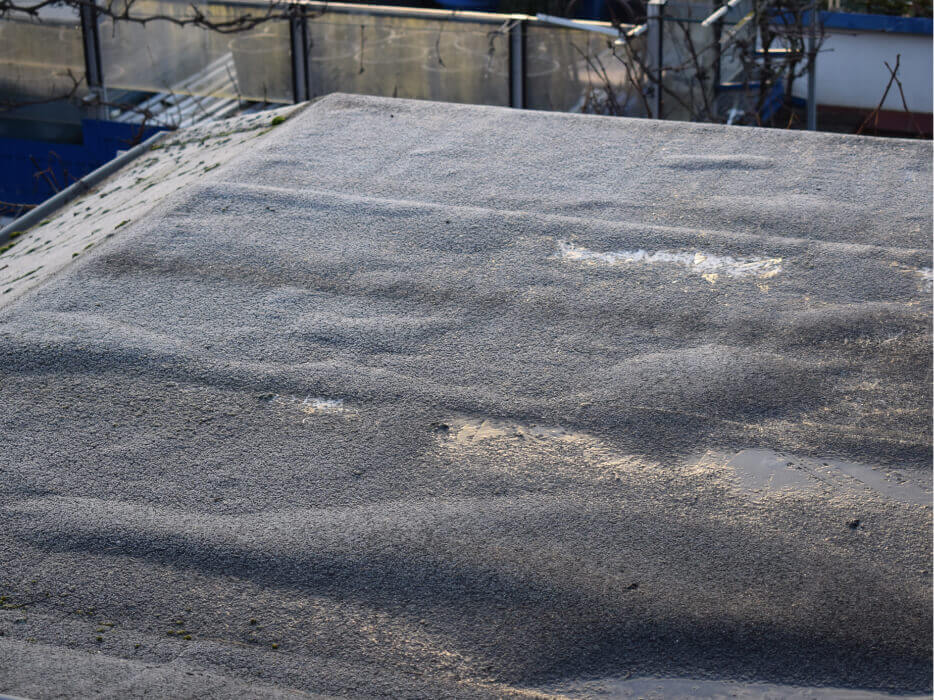
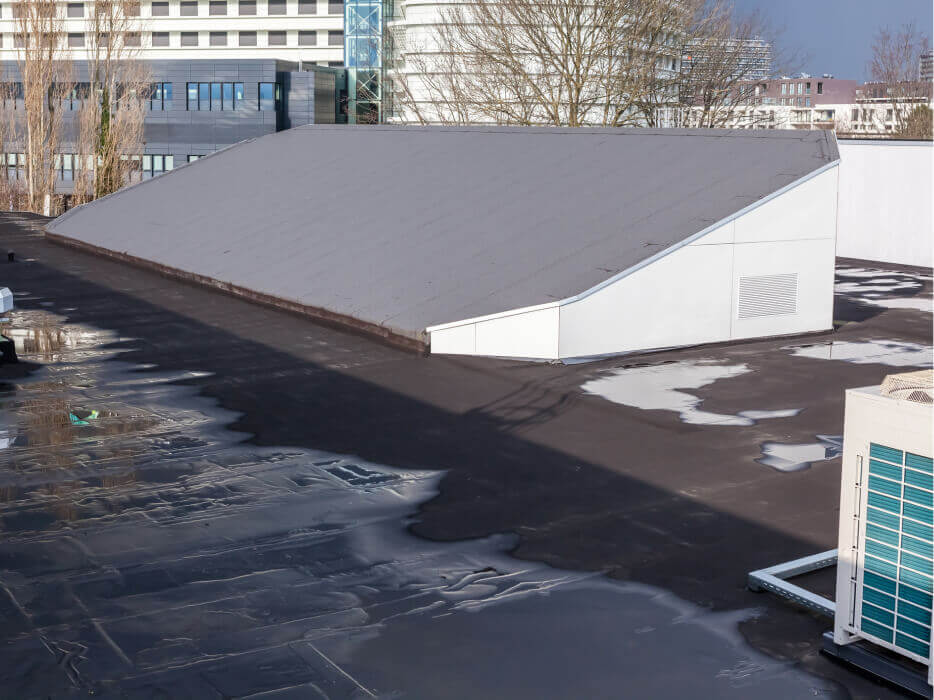
In the San Francisco Bay Area, we receive an average of just under 23 inches of rainfall per season, mostly concentrated in the winter months. Rainwater can accumulate on flat roofs, creating puddles or ponds that can last for days or weeks. This is called ponding, and it can cause several issues, such as adding extra weight and stress to the roof, eroding the roof coating, and creating leaks and water damage. Consequently, you need a roofing system that can effectively prevent water infiltration, protecting against leaks and water damage.
In the Bay Area, maintaining a flat roof isn’t just about repairs and upkeep; it’s about meeting specific local and environmental standards. This section delves into the minimum requirements for energy efficiency, sustainability, wind resistance, and urban heat mitigation. Understand how these regulations shape your choices and contribute to a greener, more resilient community

Aligned with the city’s focus on sustainability, energy-efficient roofing is vital. The right roofing materials can regulate indoor temperatures, reducing energy consumption.
In a city committed to environmental stewardship, roofing choices should support this ethos, favoring materials that are durable, efficient, and have minimal environmental impact.
In San Francisco, the often windy weather can be particularly harsh on roofs. It’s essential to choose materials with high wind resistance to prevent any lifting or tearing.
In a dense urban setting, mitigating the heat island effect is important. Reflective roofing materials can help lower surface and surrounding air temperatures.
Armstrong delivers superior roofing with 3LB density foam and dual protective layers, actively safeguarding against UV and weather. Our expert teams ensure a superior, affordable solution with comprehensive warranties.
The Blueprint to a Better Flat Roof
With 40 years of expertise in the Bay Area, we deliver unmatched foam roofing solutions. This method applies a polyurethane layer atop existing structures, sealed with UV protection and granules for longevity and style.

The seamless nature of foam roofing means there are no joints or seams where leaks could potentially occur, offering superior protection against the city’s frequent fog and rain.
Spray foam roofing has a high R-value, which means that it can resist heat transfer and keep the indoor temperature stable. This can reduce your heating and cooling costs by up to 50%, as well as lower your carbon footprint
In Coastal Conditions: Foam roofing resists the corrosive effects of salt-laden ocean air and stands up well to strong winds, making it more durable and long-lasting than traditional materials. In fact, it can last for up to 50 years or even a lifetime, with proper maintenance.
Foam roofing’s reflective properties help combat the urban heat island effect. By reflecting sunlight, it helps reduce ambient temperatures, contributing to a cooler urban environment.
Foam roofing requires less maintenance compared to BUR roofing systems. You only have to recoat it approximately every 20 years to ensure it keeps performing like new. Its versatility allows for easy application on various roof shapes and sizes, which is ideal for the diverse architecture of San Francisco. Spray foam roofing can also be applied over any existing roof material, such as asphalt, metal, or concrete, saving you time and money on roof removal and disposal.
Happy Clients